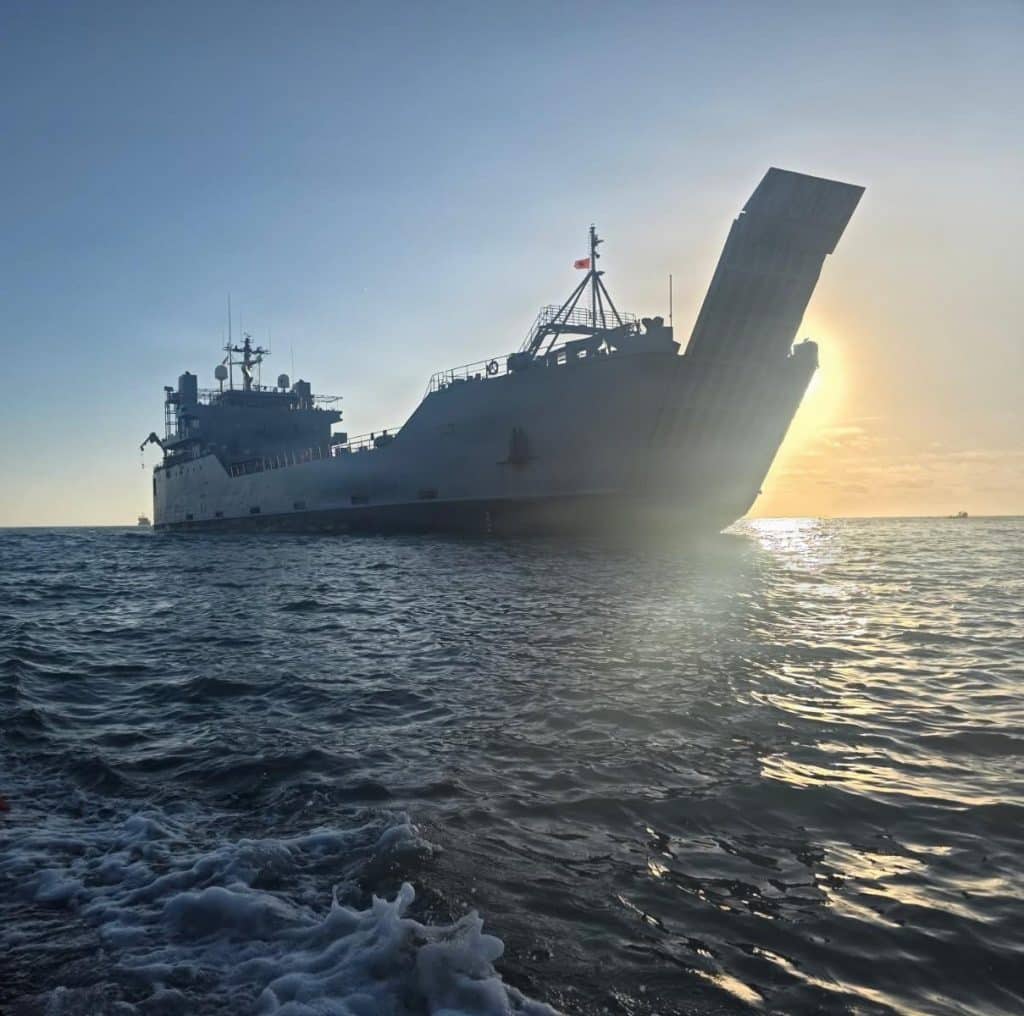
A U.S. Army landing craft launched several low-observable micro high-altitude balloons during an exercise off the coast of Morocco last month, trialing a new launched effect and satellite communications capability developed by Mach Industries to enable long-range communications and precision strikes with one-way attack drones. The exercise, African Lion 26, tested new technologies developed for U.S. ... The post U.S. Army Landing Craft Launches Drone-Dropping High-Altitude Balloons appeared first on Naval News .
The proliferation of drone warfare and the need for adaptable, stealthy, and extended-range capabilities in contested environments drives the rapid development and trialing of such systems.
This development indicates a significant leap in offensive and reconnaissance capabilities, combining naval platforms with advanced aerial systems for long-range communication and precision strike, altering strategic military planning.
The ability to deploy drone-dropping high-altitude balloons from naval craft creates new vectors for surveillance and attack, extending battlefield reach and potentially bypassing traditional air defenses.
- · Mach Industries
- · US Army
- · Defence Tech Sector
- · Naval forces
- · Traditional air defense systems
- · Adversaries with limited counter-UAV capabilities
- · Sensors relying on line-of-sight
This technology enables extended-range, low-observable intelligence gathering and precision strike capabilities far beyond current operational limits for a landing craft.
The integration of such systems could fundamentally alter naval and land-based warfare, placing emphasis on distributed and autonomous weapon systems.
It might accelerate an arms race in counter-UAV and anti-balloon technologies, leading to significant investment in novel defensive measures globally.
This signal links to a primary source. Continuum Brief monitors and indexes it as part of the live intelligence stream — we do not republish source content.
Read at Naval News