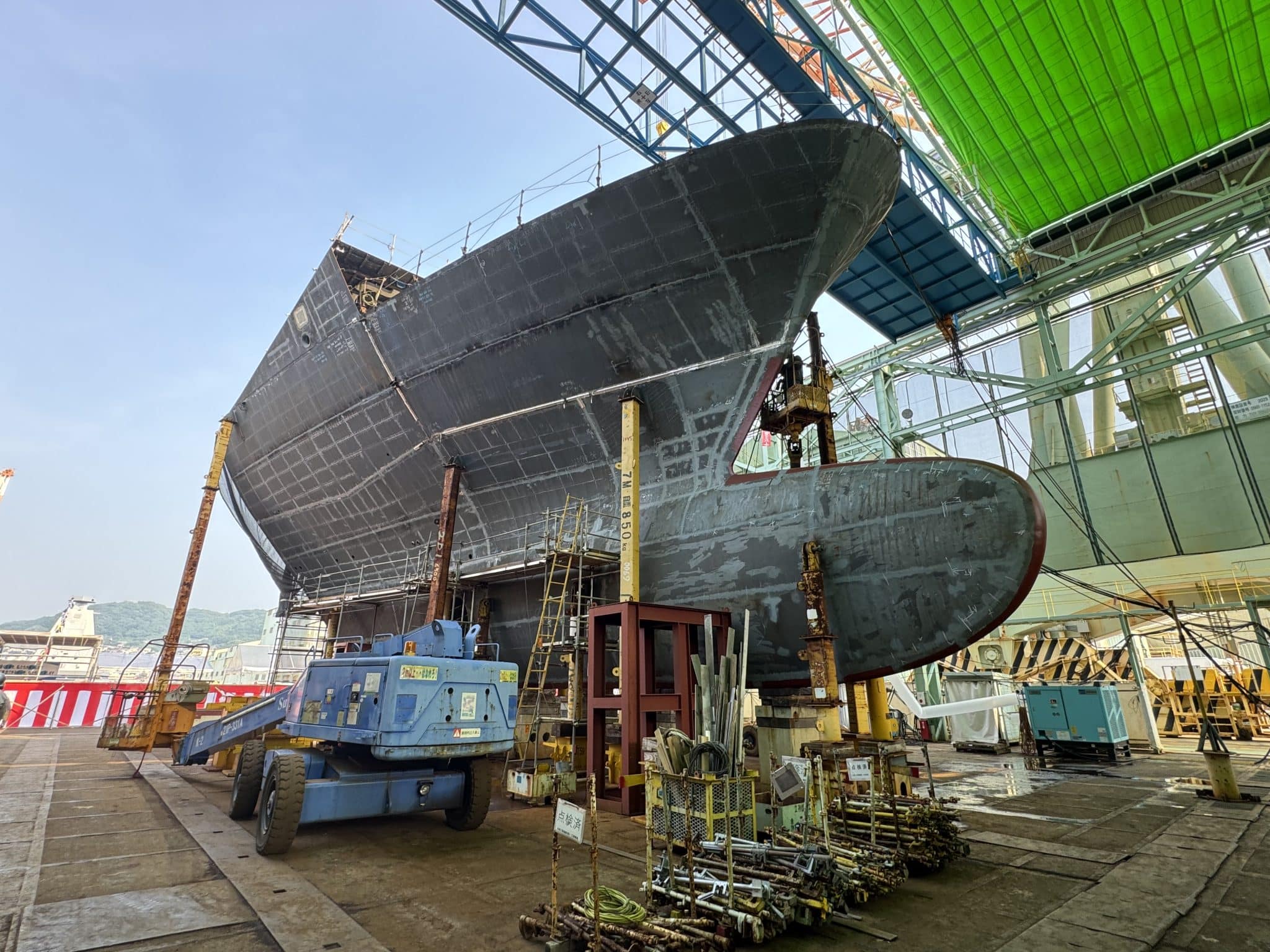
The United States may be on the verge of an unprecedented step: procuring major naval vessels from allied shipbuilders in Japan and South Korea to help address growing capacity constraints in the U.S. naval industrial base. A proposed $1.85 billion funding request included in the Pentagon’s fiscal year 2027 budget is increasingly being viewed not ... The post U.S. Eyes Warships from Japanese and South Korean Shipyards appeared first on Naval News .
The U.S. Navy faces significant capacity constraints in its domestic shipbuilding industrial base, exacerbated by geopolitical tensions and increasing demands for naval superiority.
This move signifies a potential pivot in U.S. defence procurement strategy, acknowledging the limits of its own industrial capacity and deepening defence collaboration with key allies.
The U.S. may begin relying on allied shipyards for core naval vessel procurement, significantly impacting the defence industrial landscape and geopolitical alliances.
- · Japanese shipbuilding industry
- · South Korean shipbuilding industry
- · U.S. Navy readiness
- · U.S. domestic shipbuilding industry (short-term)
- · Rival naval powers relying on U.S. shipbuilding constraints
The U.S. naval fleet expands faster, improving global force projection.
Increased integration and standardization of naval platforms among U.S., Japan, and South Korea.
Potential for allied shipyards to become integral to broader NATO or partner nation naval procurement strategies, further solidifying defence blocs.
This signal links to a primary source. Continuum Brief monitors and indexes it as part of the live intelligence stream — we do not republish source content.
Read at Naval News