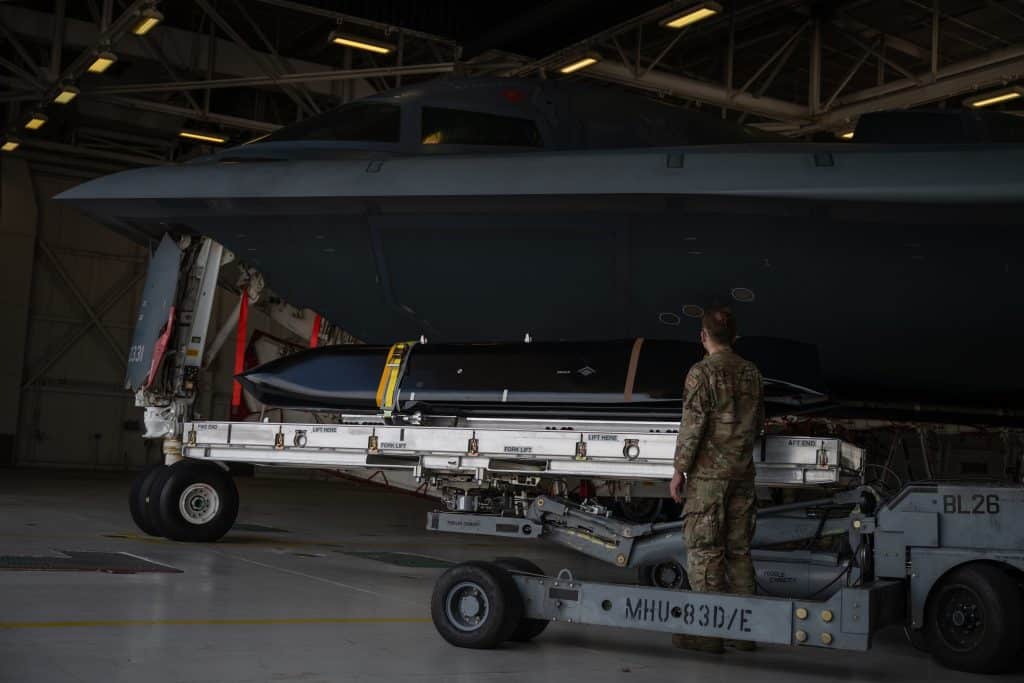
The U.S. Air Force demonstrated a new long-range and stealthy maritime strike capability from the service’s B-2 bombers employing AGM-158C Long-Range Anti-Ship Missiles (LRASM) during a recent sinking exercise in the Pacific that could prove crucial in a potential conflict with China. “By prioritizing counter-maritime strike operations, we can maintain a decisive edge over adversaries, ... The post U.S. Pacific Air Forces Flex B-2 Stealth Bomber LRASM Capability appeared first on Naval News .
The US is prioritizing the development and demonstration of advanced maritime strike capabilities amidst escalating geopolitical tensions, particularly in the Pacific, to counter potential adversaries.
This demonstration showcases a significant upgrade in US long-range anti-ship capabilities, enhancing deterrence and projecting power in key strategic theaters, which could alter naval power dynamics.
The B-2 bomber, traditionally a nuclear platform, is now publicly validated with a stealthy, long-range anti-ship role, expanding its mission set and the options available for conventional deterrence.
- · US Air Force
- · Lockheed Martin (LRASM manufacturer)
- · US defence industry
- · Allied nations in the Pacific
- · Potential adversaries reliant on surface fleets
- · Traditional naval air assets for anti-ship missions
The immediate consequence is enhanced US naval projection and anti-access/area denial (A2/AD) capabilities in vital maritime regions.
This could accelerate similar counter-maritime capability development by other major powers, leading to an arms race in long-range stealthy anti-ship weapons.
The increased threat to surface fleets might shift naval doctrine towards smaller, more dispersed, and harder-to-target vessels, including submarine and unmanned platforms.
This signal links to a primary source. Continuum Brief monitors and indexes it as part of the live intelligence stream — we do not republish source content.
Read at Naval News