Uber Improves Restaurant Recommendations Using Real-Time Signals and Listwise Ranking
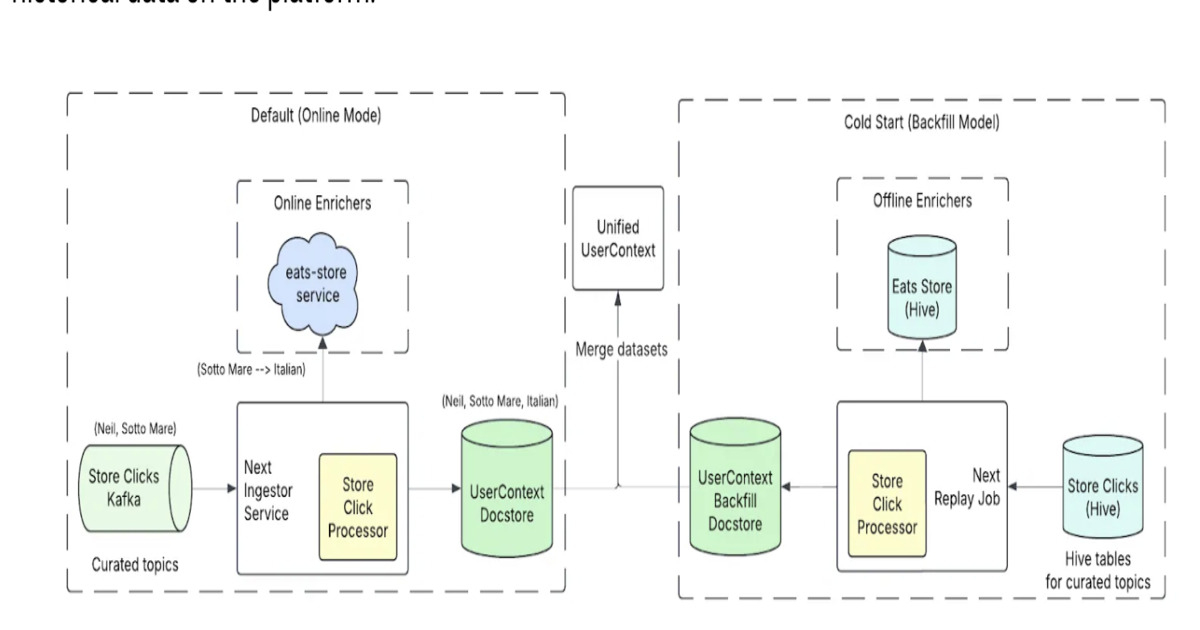
Uber updates its Uber Eats Home Feed recommendation system using near real-time user sequence features and a Generative Recommender model. The system evolves from hand-crafted features to transformer-based sequence modeling, reduces feature freshness from 24 hours to seconds, and shifts from pointwise scoring to listwise GenRec for improved contextual ranking and real-time personalization. By Leela Kumili
The rapid advancement in generative AI and real-time data processing capabilities is enabling companies like Uber to significantly enhance personalization and recommendation systems.
This development highlights the practical application and immediate value of advanced AI techniques in improving user experience and operational efficiency for large-scale platforms, setting a new standard for personalization.
Recommendation systems are shifting from batch-processed, hand-crafted features to real-time, AI-driven, and context-aware models that provide significantly more accurate and dynamic personalization.
- · Uber
- · Generative AI providers
- · E-commerce platforms
- · Consumers
- · Legacy recommendation systems
- · Companies slow to adopt real-time AI
Uber Eats users receive significantly more relevant and timely restaurant recommendations, leading to increased engagement and sales.
Other major platforms will rapidly accelerate their adoption of similar real-time generative AI models to remain competitive in personalization.
The heightened expectations for real-time personalization will drive an industry-wide need for more sophisticated MLOps and event-driven architectures to support continuous model evolution and deployment.
This signal links to a primary source. Continuum Brief monitors and indexes it as part of the live intelligence stream — we do not republish source content.
Read at InfoQ