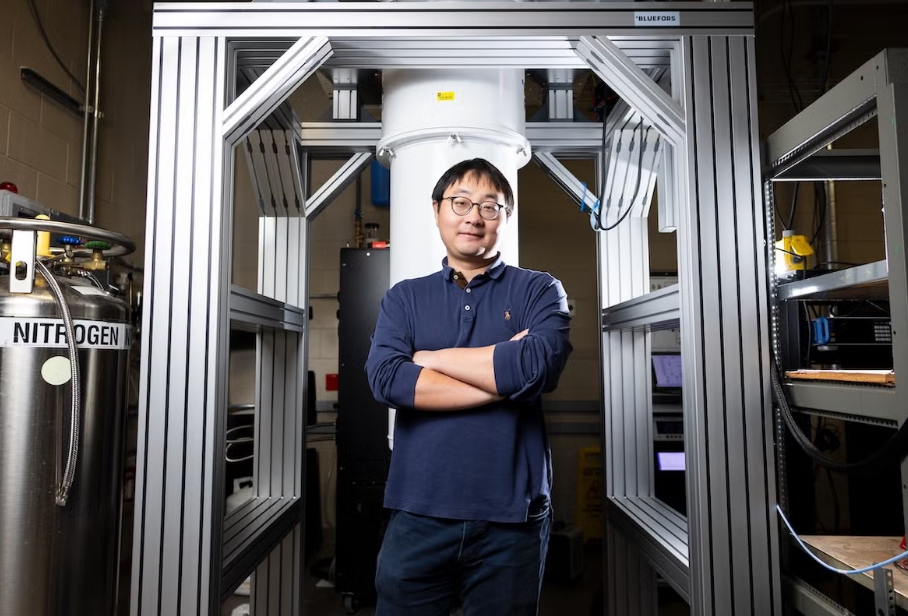
Insider Brief Quantum computers could one day solve problems beyond the reach of even the world’s most powerful supercomputers, accelerating everything from drug discovery to the development of advanced materials and cleaner energy technologies. But the fragile quantum states that make such machines possible are notoriously easy to disrupt. Even tiny changes in the environment – such as stray radio waves, […]
The development of fault-tolerant quantum computing is a critical bottleneck, and ongoing research is continuously seeking breakthroughs to overcome this challenge.
Reducing quantum computing errors is fundamental for scaling quantum computers to practical applications, which will unlock new capabilities in various industries.
This new approach could accelerate the timeline for realizing useful, large-scale quantum computers by addressing a core technical hurdle.
- · Quantum computing researchers
- · Companies developing quantum hardware
- · Industries relying on advanced computation (e.g., pharmaceuticals, materials sci
- · Traditional supercomputing market (in the long term)
- · Competitors with less effective error correction methods
Improved error correction will enable more stable and complex quantum algorithms to be run.
The increased reliability of quantum systems will draw more investment and talent into the field.
Practical fault-tolerant quantum computers could lead to the discovery of new drugs and materials, fundamentally altering those industries.
This signal links to a primary source. Continuum Brief monitors and indexes it as part of the live intelligence stream — we do not republish source content.
Read at The Quantum Insider