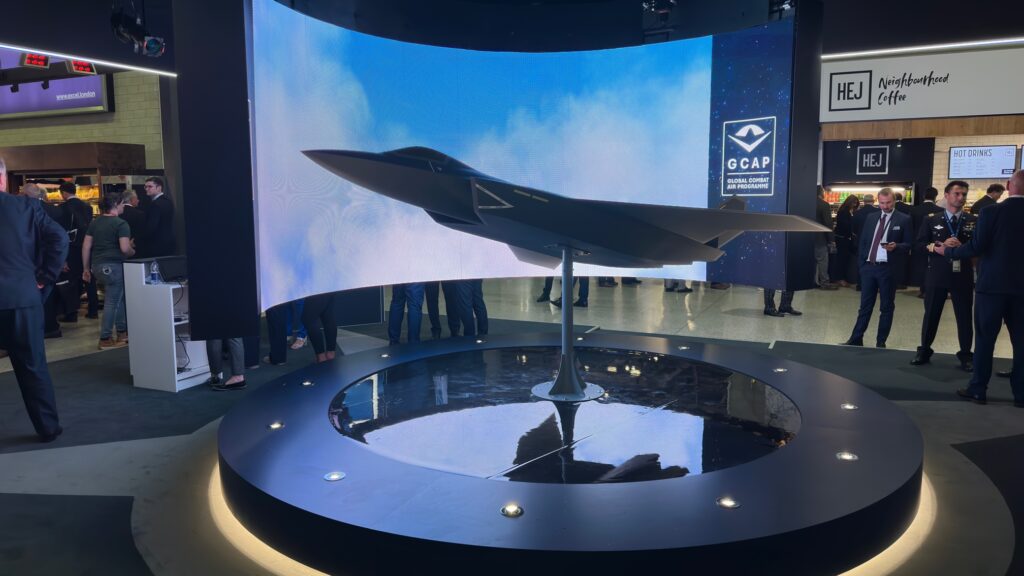
Italy, Japan and the UK are committed to the future fighter effort, with a timeframe of 2035 marked for entry into service.
The UK, Italy, and Japan are moving rapidly towards formalizing their commitment to the GCAP project, reflecting immediate strategic defense needs and a desire to secure future air superiority amid evolving geopolitical landscapes.
This contract signing signifies a concrete step towards developing a crucial sixth-generation fighter, indicating a significant investment in advanced defense capabilities and international military collaboration outside the US F-35 program.
Closer defense industrial alignment between the UK, Italy, and Japan around a cutting-edge aerospace project, potentially shifting power dynamics in military aviation development and procurement.
- · GCAP participating nations (UK, Italy, Japan)
- · European defense contractors
- · Japanese aerospace industry
- · NATO interoperability
- · Competitor defense programs (e.g., FCAS)
- · Nations reliant solely on US fighter exports
- · Legacy fighter jet manufacturers
The confirmed GCAP contract will accelerate R&D and manufacturing efforts for advanced air combat systems.
This collaboration could foster deeper political and economic ties between the UK, Italy, and Japan, influencing future geopolitical alignments.
Successful development of GCAP might create a new global standard for sixth-generation fighter technology, challenging existing market leaders.
This signal links to a primary source. Continuum Brief monitors and indexes it as part of the live intelligence stream — we do not republish source content.
Read at Breaking Defense — Air