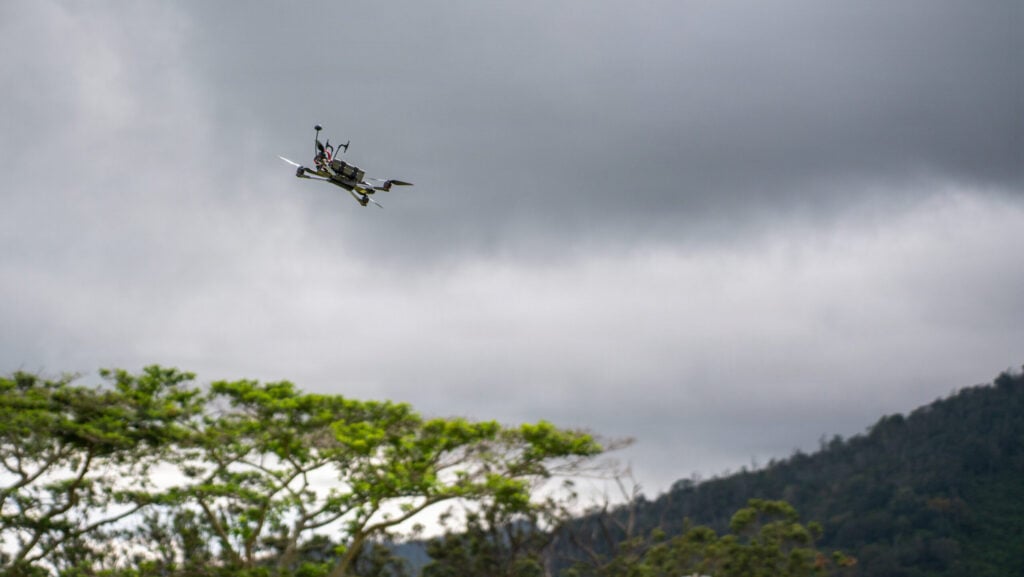
So far, the department has ordered 20,000 small, FPV-style drones from 10 vendors.
The US Department of Defense is actively responding to contemporary warfare lessons, particularly from conflicts demonstrating the efficacy of mass-produced, low-cost drone technology.
This initiative signifies a concrete shift in US defence procurement, emphasizing agile, distributed capabilities over traditional, high-cost platforms, and validating a new model of military-industrial engagement.
The Pentagon's 'Drone Dominance' program is now moving from conceptual to implementation, accelerating the integration of small, attritable drones into US military doctrine and operations.
- · US small drone manufacturers
- · companies specializing in FPV drone technology
- · US military branches prioritizing distributed, autonomous systems
- · Ukraine (as a potential beneficiary of similar supply chain acceleration)
- · Traditional defence contractors focused solely on large, expensive platforms
- · adversaries unprepared for mass drone deployments
- · bureaucratic procurement processes
The rapid procurement of 20,000 small drones enhances the US military's tactical capabilities for reconnaissance, targeting, and swarming operations.
This program will likely spur further innovation and competition within the small drone industry, accelerating technological advancements and driving down unit costs.
The successful integration of these drones could fundamentally alter future conflict dynamics, shifting the balance of power towards forces adept at mass-produced, AI-enabled autonomous systems.
This signal links to a primary source. Continuum Brief monitors and indexes it as part of the live intelligence stream — we do not republish source content.
Read at Breaking Defense