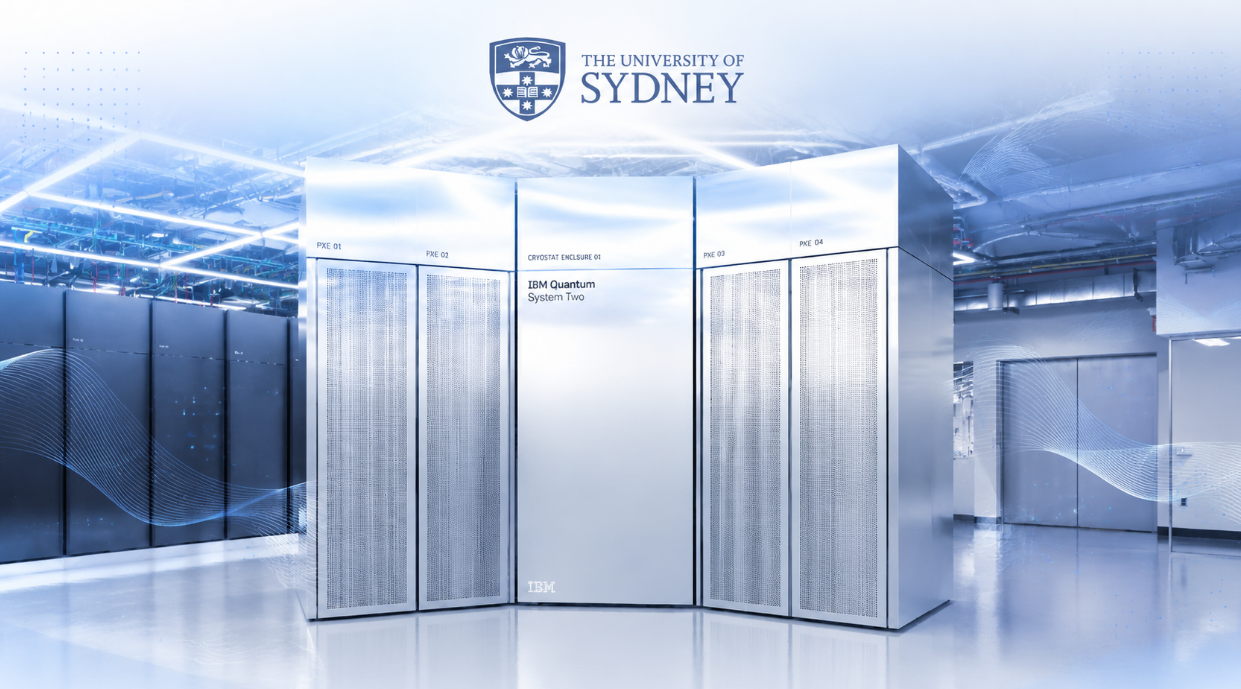
Insider Brief Researchers from the University of Sydney, working with IBM, have identified and quantified important factors limiting the performance of quantum computers and demonstrated ways to overcome their impact. The findings, which improve our understanding of how errors emerge during quantum computations, could significantly advance the reliability of quantum technology. The paper has been published in Nature […]
The continuous drive to improve quantum computing reliability necessitates ongoing research into error correction, with major players dedicating significant resources to overcoming fundamental limitations.
Improving quantum error correction is critical for scaling quantum computers and achieving fault-tolerant quantum computation, making this development a key step towards practical quantum applications.
This research provides a more refined understanding of error sources in quantum computations, enabling more targeted and effective strategies for error mitigation.
- · IBM
- · University of Sydney
- · Quantum computing researchers
- · Quantum hardware developers
- · Competitors reliant on less sophisticated error correction
- · Classical computing (in the very long term)
Identification of major error sources will accelerate the development of more robust quantum hardware and software.
Faster progress in quantum error correction could bring forward the timeline for commercially viable fault-tolerant quantum computers.
The acceleration of quantum computing capabilities could lead to breakthroughs in materials science, drug discovery, and complex optimization problems, impacting various industries.
This signal links to a primary source. Continuum Brief monitors and indexes it as part of the live intelligence stream — we do not republish source content.
Read at The Quantum Insider