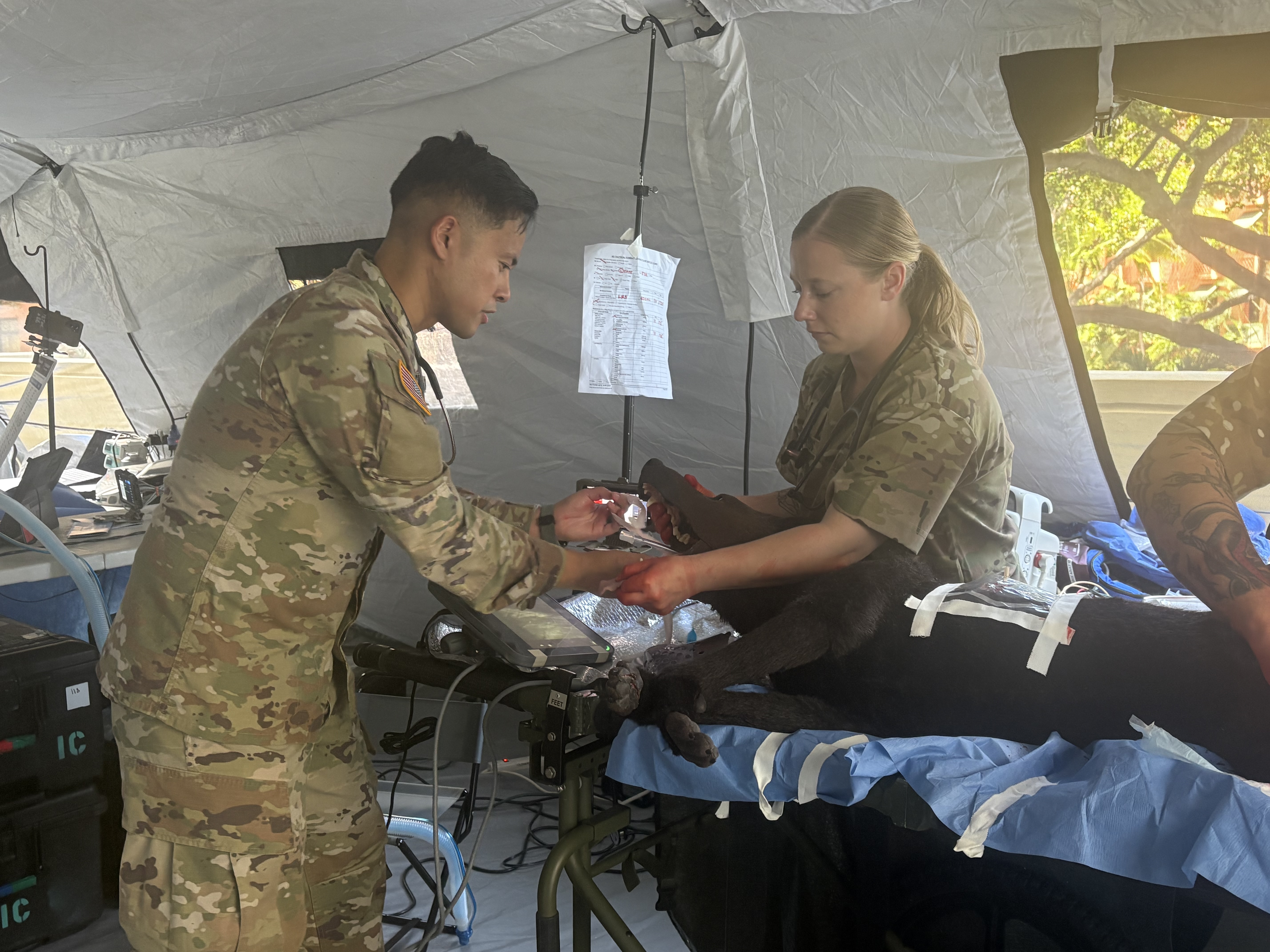
The Army wants to better utilize veterinarians in combat medicine to prepare for the possibility of large-scale operations in the Indo-Pacific.
The US Army is preparing for potential large-scale conflicts in the Indo-Pacific, necessitating a re-evaluation of medical readiness and resource optimization.
This indicates a significant shift in military medical strategy, highlighting the resource constraints and unique challenges of operating in a contested Indo-Pacific environment.
Veterinarians will be integrated into human combat care, reflecting an adaptive approach to medical personnel utilization in future conflicts, particularly given their advanced surgical and physiological training.
- · US Army Medical Command
- · Military veterinarians
- · Combat medicine innovation
- · Traditional military medical silos
- · Assumptions of abundant medical resources
Increased medical support capacity and flexibility for human combat casualties by leveraging existing veterinary expertise.
Potential for further integration of diverse medical specialities to address personnel shortages and expand capabilities in austere environments.
Development of dual-use medical technologies and training protocols that bridge human and animal medicine, with broader implications for disaster response.
This signal links to a primary source. Continuum Brief monitors and indexes it as part of the live intelligence stream — we do not republish source content.
Read at Defense News