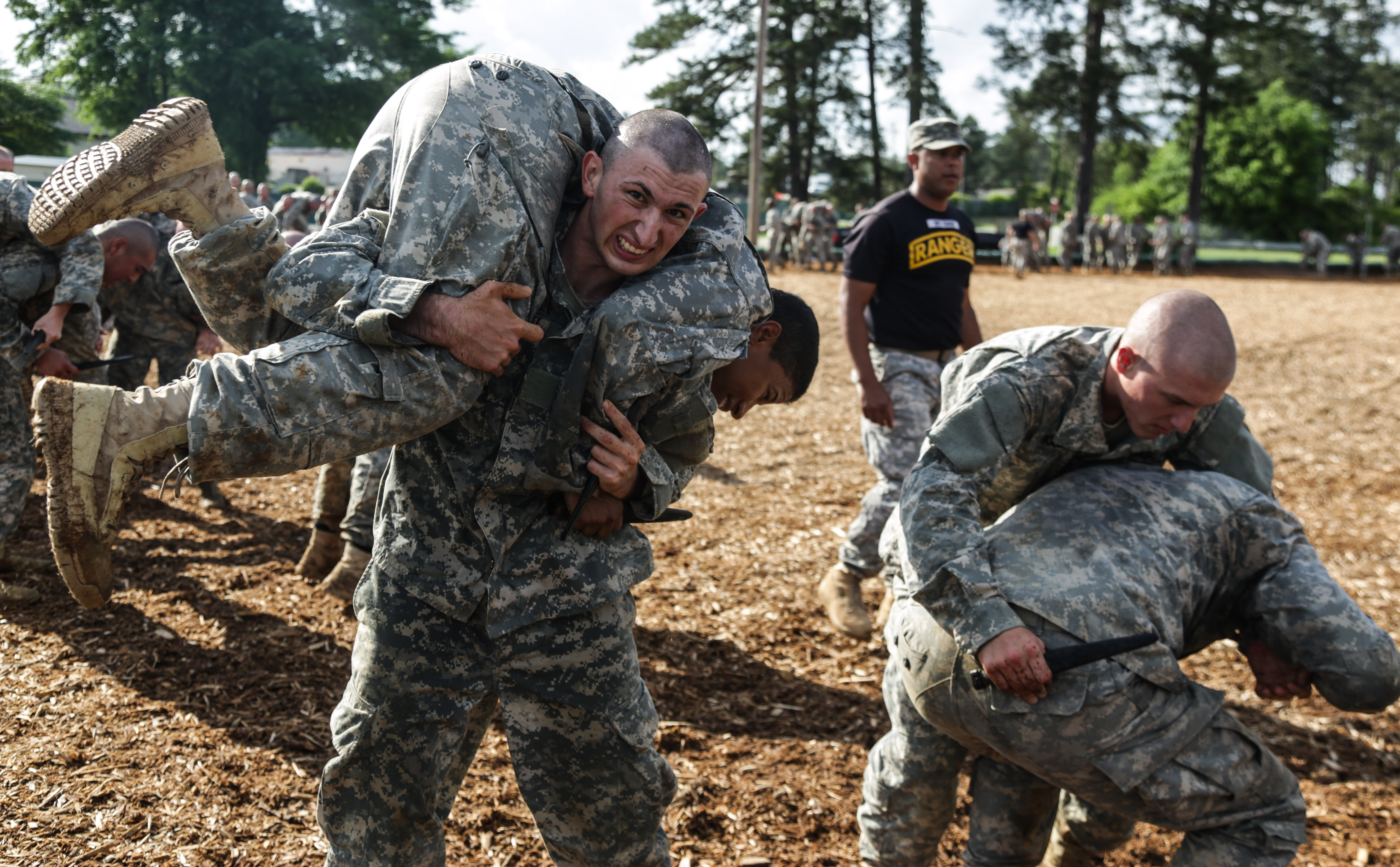
Researchers tracked hormone levels, blood markers and body composition over the weeks-long school and published their findings this month.
The study was recently published, providing new data on physiological differences between genders in extreme physical training like Ranger School.
This study offers insights into the physiological demands of elite military training, potentially influencing future training protocols, recruitment strategies, and gender integration policies.
Understanding of the differential physiological impact of intense military training on male versus female bodies is updated, suggesting potential adjustments to military fitness and readiness standards.
- · Military researchers
- · Sports science
- · Recruitment strategists
- · Static military training protocols
The US Army will likely review and potentially modify Ranger School training and assessment methods based on these physiological findings.
This could lead to broader discussions within other military branches about gender-specific training adjustments for elite units.
Long-term, it may influence the design of advanced human performance optimization programs within the military, leveraging personalized physiological data.
This signal links to a primary source. Continuum Brief monitors and indexes it as part of the live intelligence stream — we do not republish source content.
Read at Army Times