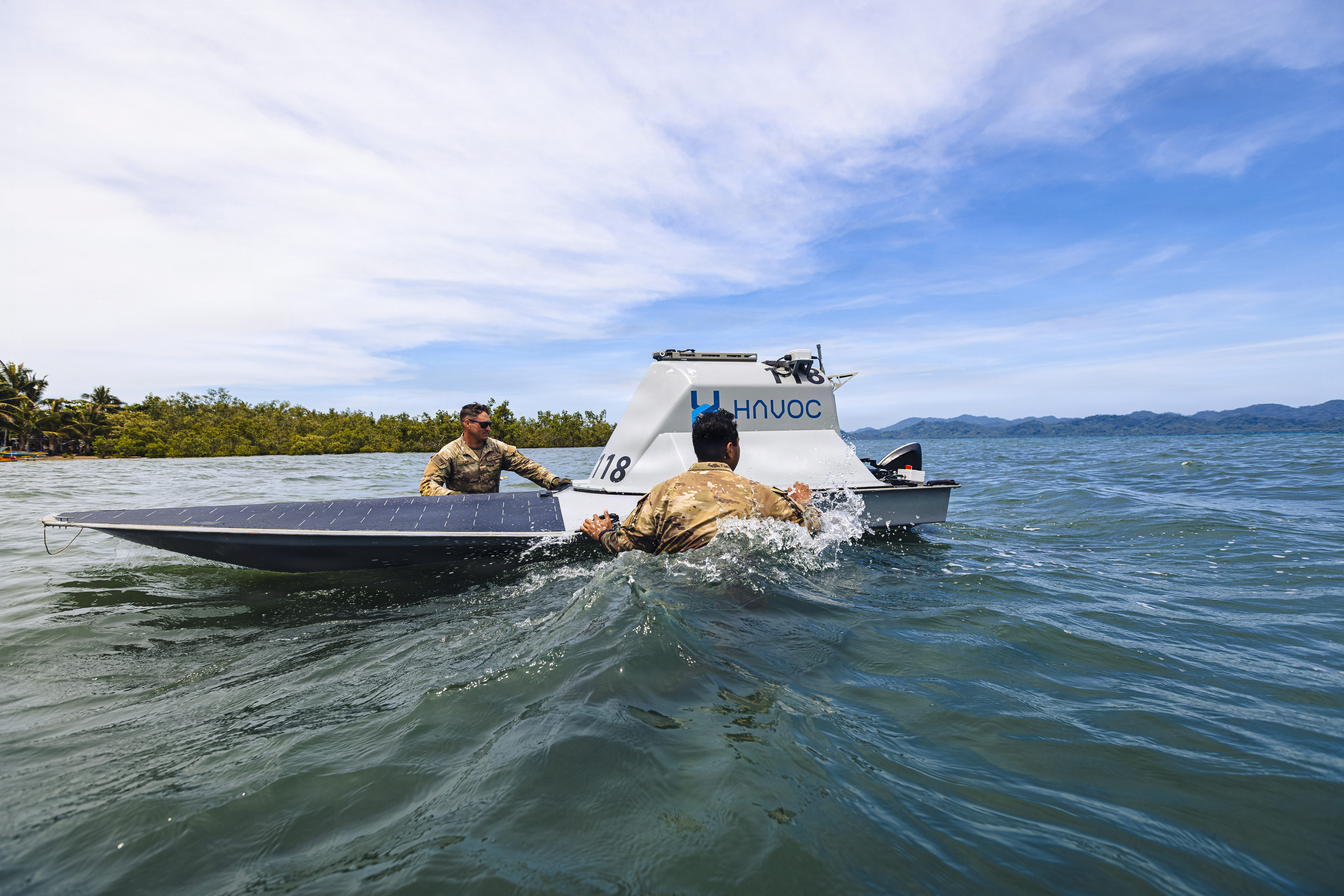
Autonomous boats helped escort a U.S. Army vessel during a military exercise, in a demonstration of how uncrewed assets are changing maritime operations.
The US military is actively pursuing integration of autonomous systems into operations to enhance capabilities and reduce risk, with exercises serving as critical testing grounds for these emerging technologies.
This demonstrates a tangible step towards the future of naval warfare, where uncrewed systems will play an increasingly prominent role in surveillance, patrol, and escort, impacting defence strategies and spending.
The operational paradigm for maritime security is shifting from purely crewed vessels to a hybrid model incorporating autonomous assets, necessitating new doctrines, training, and procurement priorities.
- · Defense contractors specializing in autonomous marine systems
- · Naval forces adopting AI/robotics
- · Software and AI development firms
- · Traditional shipbuilding industries slow to adapt
- · Navies reliant solely on conventional crewed vessels
Increased investment and development in autonomous maritime technologies by global defense establishments.
The proliferation of affordable uncrewed naval systems could alter the balance of power in contested maritime zones.
Ethical and legal frameworks for autonomous maritime combat and decision-making will become a critical international policy challenge.
This signal links to a primary source. Continuum Brief monitors and indexes it as part of the live intelligence stream — we do not republish source content.
Read at Army Times