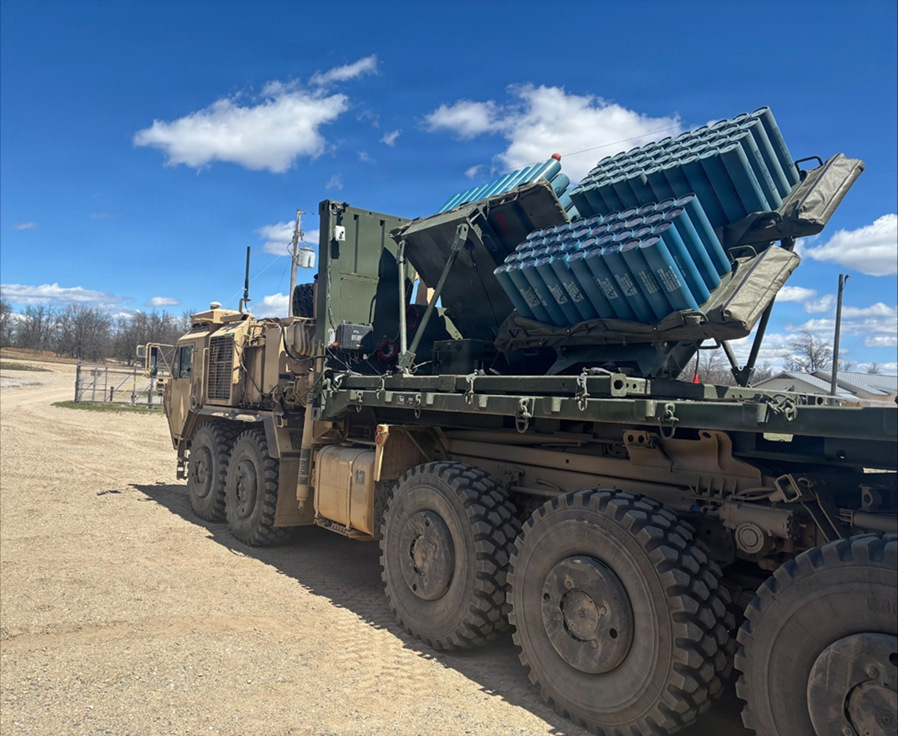
The Army’s Volcano mine dispenser can blanket 32 acres of terrain with up to 960 mines. Now, the Army is testing an autonomous version.
Ongoing global conflicts, particularly in Eastern Europe, have highlighted the critical role of mine warfare and the need for rapid, efficient mine deployment, pushing militaries to explore autonomous solutions.
This development indicates a significant push towards integrating autonomy into conventional warfare, enhancing the speed and scale of tactical operations while potentially reducing human risk.
The battlefield advantage shifts further towards forces capable of rapid, autonomous deployment of area denial systems, making traditional counter-mine operations more complex and dangerous.
- · Defence contractors developing autonomous systems
- · Military forces integrating similar autonomous capabilities
- · Nations or alliances investing in advanced mine warfare
- · Traditional mine-laying units
- · Forces reliant on conventional mine-clearing techniques
- · Civilian populations in conflict zones due to increased mine presence
The US Army gains a substantially faster and safer method for deploying minefields, enabling more dynamic area denial and defensive posture.
This prompts other major powers to accelerate their own autonomous mine-laying and counter-mine technology development to maintain parity.
Future conflicts could see highly automated, rapidly shifting minefields, demanding entirely new doctrines for ground maneuver and force protection.
This signal links to a primary source. Continuum Brief monitors and indexes it as part of the live intelligence stream — we do not republish source content.
Read at Defense News