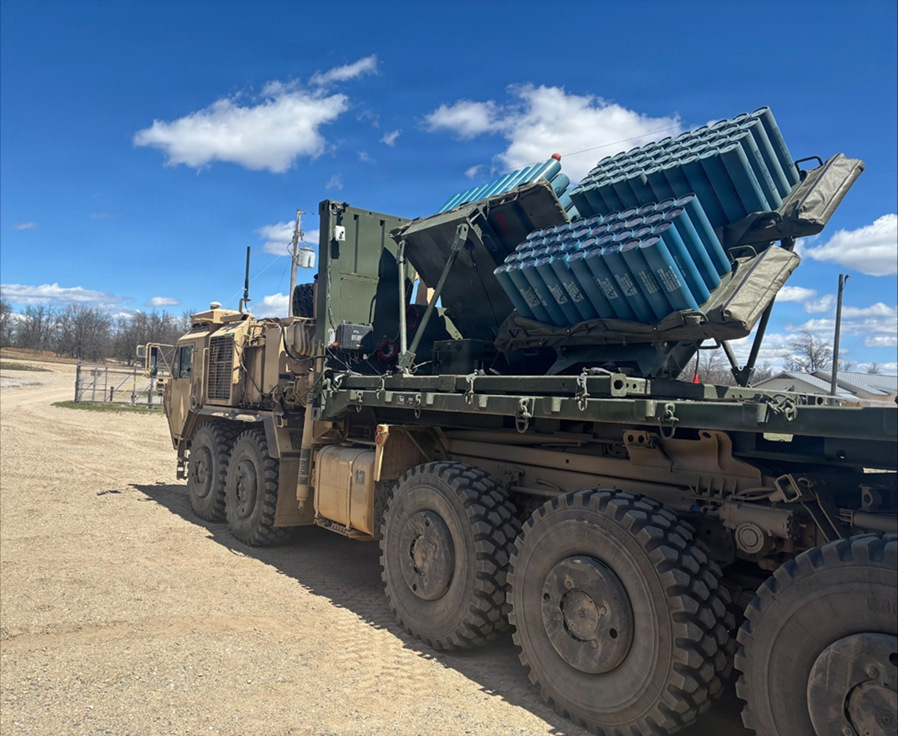
The Army’s Volcano mine dispenser can blanket 32 acres of terrain with up to 960 mines. Now, the Army is testing an autonomous version.
Ongoing global conflicts and strategic competition are accelerating the development and deployment of autonomous military systems to enhance combat effectiveness and reduce risk to personnel.
This development highlights the rapid integration of autonomy into critical military functions, signaling a shift in future warfare doctrine and operational capabilities.
The deployment of autonomous mine-laying systems changes the speed, scale, and risk profile of minefield deployment, impacting future land warfare strategies and defense planning.
- · Defense contractors
- · Military forces adopting autonomous systems
- · Software and AI developers
- · Opposing ground forces
- · Traditional mine-laying methodologies
- · Human military personnel in hazardous roles
Autonomous mine-laying will increase the speed and density of minefield deployment, making contested areas more rapidly impassable.
This could lead to a proliferation of autonomous weapon systems across various military applications, increasing the complexity and automation of future battlefields.
The ethical and international legal frameworks governing autonomous weapons will face increased pressure and require rapid evolution to address these capabilities.
This signal links to a primary source. Continuum Brief monitors and indexes it as part of the live intelligence stream — we do not republish source content.
Read at Army Times