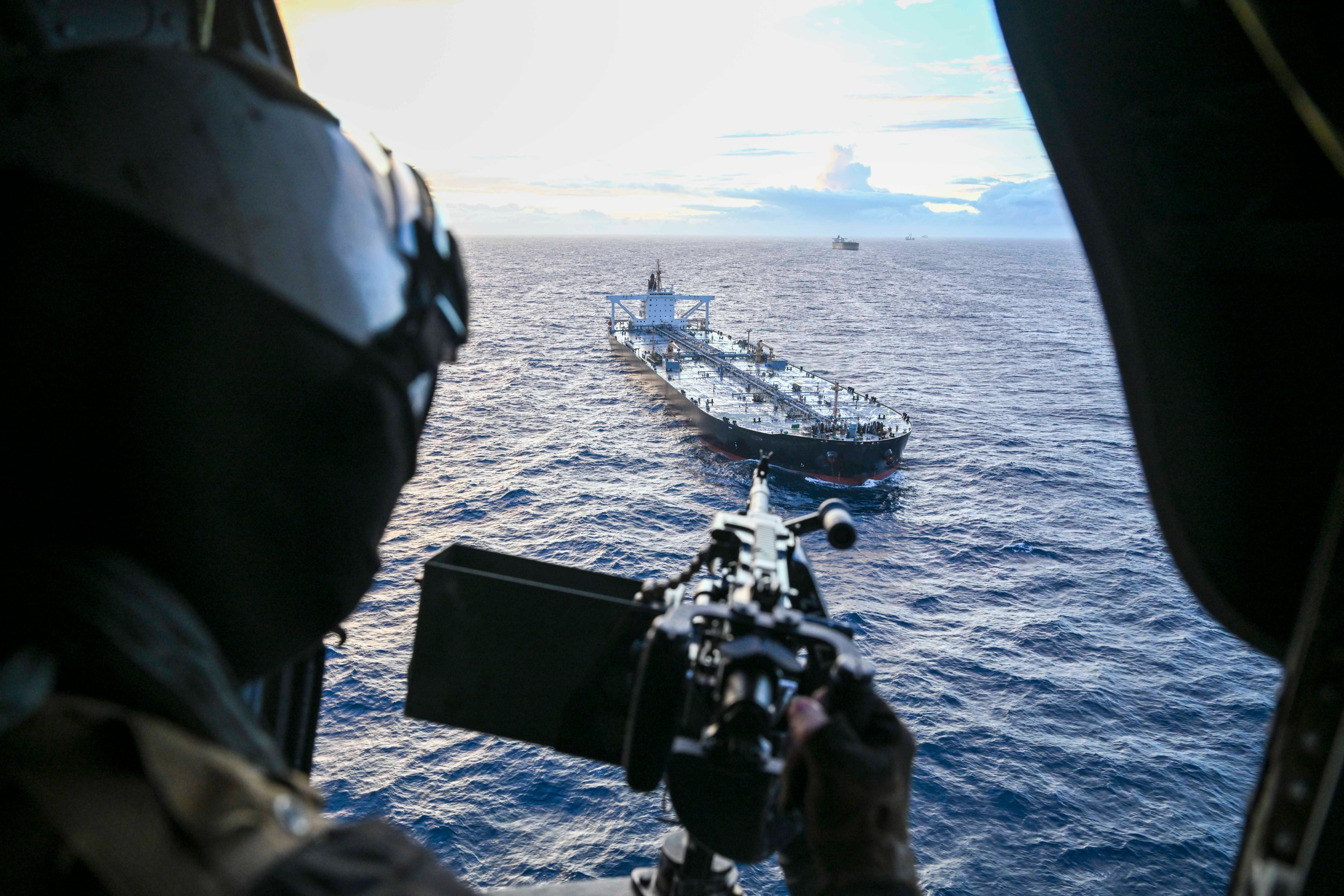
U.S. forces have intercepted multiple commercial and oil tankers in the Indian Ocean in recent months.
The increased frequency of US interdictions reflects rising geopolitical tensions and efforts to enforce sanctions against specific regimes, particularly those financing proxies or illicit activities.
This activity indicates a continued and potentially escalating projection of naval power to enforce international norms and sanctions, impacting shipping routes and the flow of certain commodities.
The proactive boarding of sanctioned tankers in international waters highlights an intensified strategy of interdiction, potentially leading to more frequent confrontations and disruptions to maritime trade.
- · US Navy
- · Allied maritime powers
- · Security-focused shipping analytics firms
- · Sanctioned nations and entities
- · Illicit shipping operators
- · Insurance companies for high-risk maritime routes
Increased costs and risks for illicit shipping operations.
Potential for retaliatory actions or heightened tensions in key maritime chokepoints.
Long-term shifts in global energy and commodity flows as risk premiums rise for certain routes.
This signal links to a primary source. Continuum Brief monitors and indexes it as part of the live intelligence stream — we do not republish source content.
Read at Air Force Times