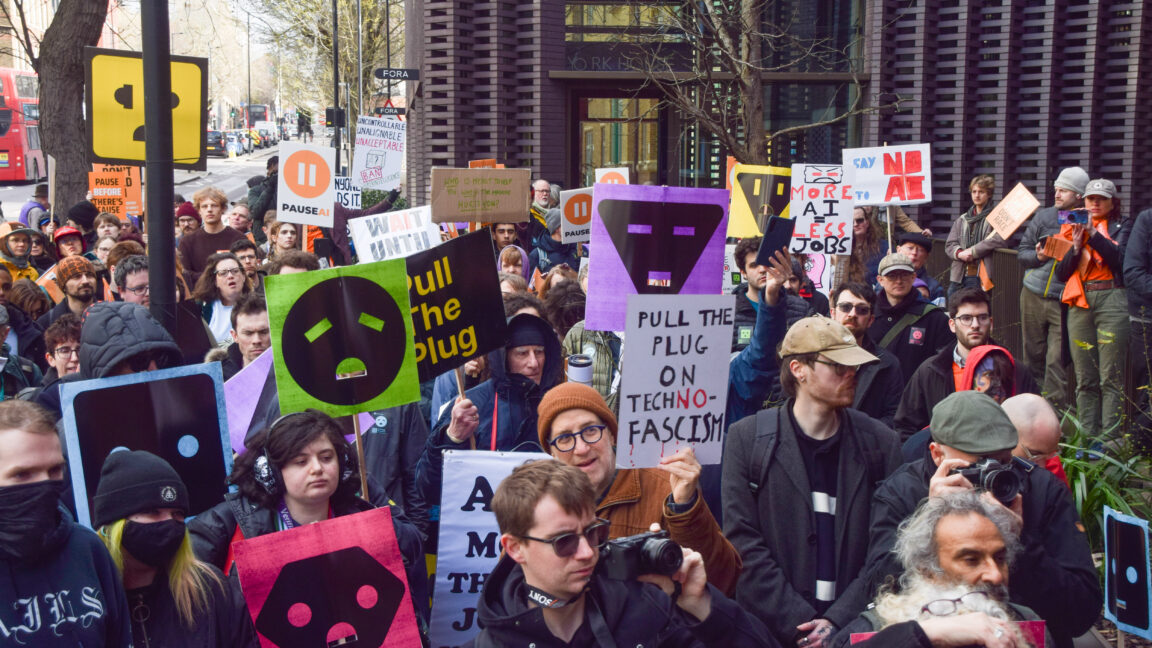
The feds are raising the alarm about a new category of threat.
The rapid deployment and increasing capabilities of AI have led to growing societal anxieties and public discourse now escalating into direct threats, prompting law enforcement to recognize and warn of anti-technology extremism.
The emergence of 'anti-tech extremism' signals a new front in societal resistance to technological advancement, posing security risks and potentially influencing regulatory frameworks and public acceptance of AI.
Law enforcement agencies are now categorizing organized resistance to AI as a potential extremist threat, shifting the discourse from ethical concerns to national security implications.
- · Cybersecurity firms
- · Surveillance technology providers
- · Government security agencies
- · AI developers
- · Open-source AI advocates
- · Companies relying on public trust in AI
Increased surveillance and monitoring of online forums and groups discussing AI's negative impacts.
Potential for new legislation aimed at curbing 'anti-tech' activities, impacting freedom of speech and assembly.
A wider societal polarization where AI adoption becomes a flashpoint for deeper ideological conflicts.
This signal links to a primary source. Continuum Brief monitors and indexes it as part of the live intelligence stream — we do not republish source content.
Read at Ars Technica — AI