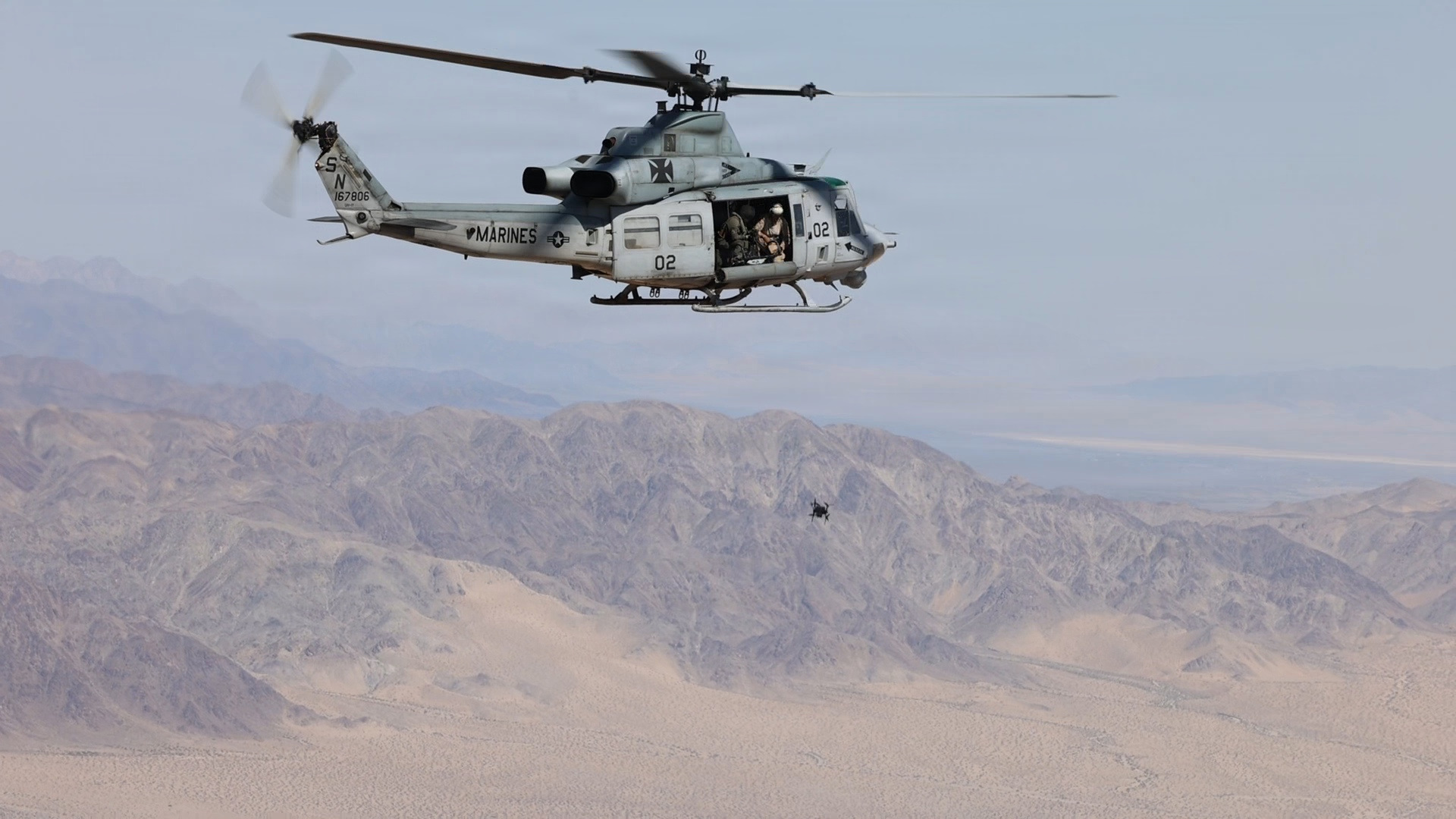
During the test, troops launched a Neros Archer FPV drone from the ground before transferring control to operators aboard a helicopter orbiting miles away.
The US Marine Corps is actively investing in autonomous systems and distributed operations, making this test a natural progression in their strategic modernizations.
This development highlights the increasing integration of autonomous drone operations with manned platforms, enhancing military flexibility and survivability.
The operational paradigm for drone control extends from ground-based to airborne command centers, enabling greater range and tactical advantage.
- · Defense contractors (drone/autonomy)
- · US Marine Corps
- · Military intelligence
- · Traditional ground-based command centers
- · Less technologically advanced militaries
Helicopters gain enhanced utility as mobile command and control nodes for distributed drone operations.
Increased survivability for drone operators and expanded operational reach for reconnaissance and strike missions.
Potential for a new doctrine where manned aircraft serve primarily as 'motherships' for swarms of autonomous systems.
This signal links to a primary source. Continuum Brief monitors and indexes it as part of the live intelligence stream — we do not republish source content.
Read at Defense News