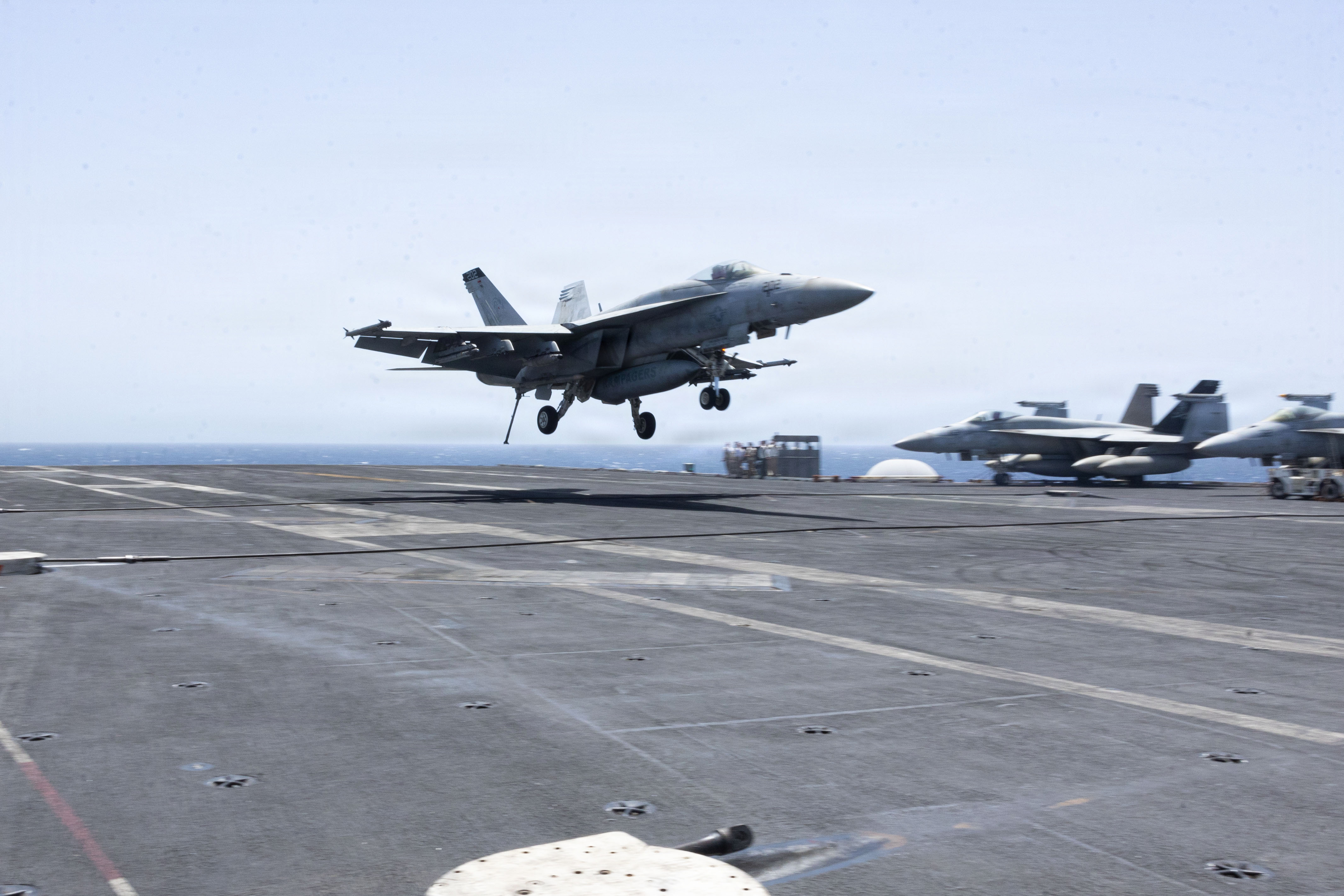
The ceasefire that began April 12 between the U.S. and Iran is still in effect, U.S. Central Command confirmed.
The ongoing tension between the US and Iran continues to manifest in military engagements, despite attempts at de-escalation like the ceasefire. This indicates a persistent underlying strategic friction in the region.
A strategic reader should care because continued military action, even defensive, underscores the fragile stability in a critical geopolitical region and highlights the continued engagement of major powers. It also showcases the practical application and necessity of contemporary defense technologies.
The confirmed continuation of self-defense strikes and missile interceptions indicates active military engagement remains a critical component of regional stability for the US, even amidst a nominal ceasefire. This suggests a more active and dynamic military posture than implied by a mere ceasefire.
- · US military-industrial complex
- · Defence tech companies
- · US Central Command
- · Regional stability advocates
- · Iranian military assets
Ongoing military exchanges will likely lead to increased demand for advanced defensive and offensive military technologies.
Sustained high-tension operations could escalate into broader regional conflicts, impacting global energy markets and shipping lanes.
The demonstrated effectiveness of modern defense systems in these interceptions might influence other nations' defence spending and procurement strategies.
This signal links to a primary source. Continuum Brief monitors and indexes it as part of the live intelligence stream — we do not republish source content.
Read at Navy Times