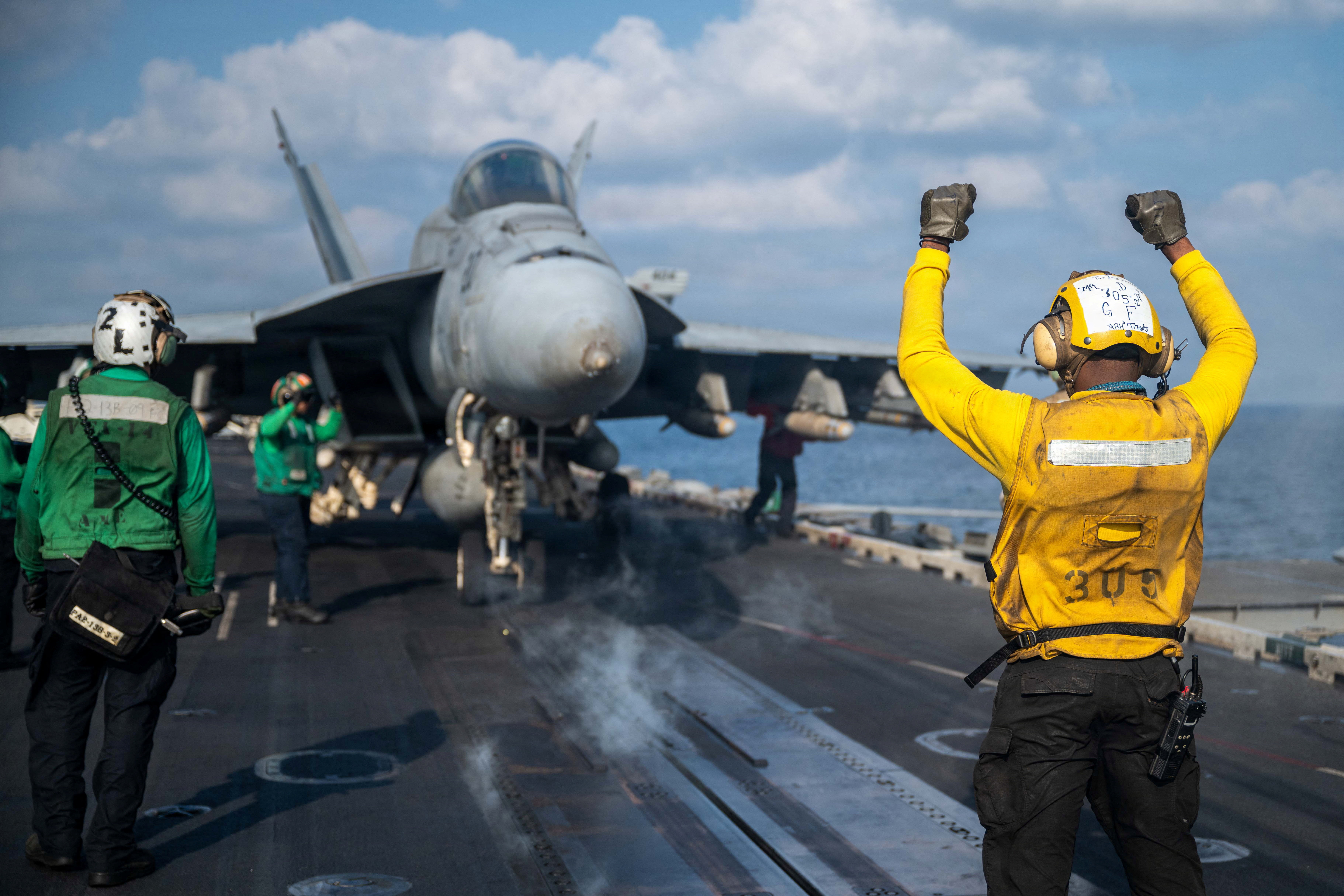
An F/A-18 Super Hornet assigned to the aircraft carrier USS Abraham Lincoln fired a precision munition into the vessel's engineering and steering spaces.
The incident occurs amidst heightened tensions in maritime chokepoints and increasing use of advanced military technology for deterrence and conflict. This event highlights the ongoing militarization of key trade routes and the use of air power in naval engagements.
This event demonstrates advanced naval capabilities and the potential for precision strikes against maritime targets, underscoring the escalating risks in critical shipping lanes. It has implications for maritime security, international shipping, and the future of naval warfare doctrine against non-state or asymmetrical threats.
The incident demonstrates a clear escalation in the operational engagement capabilities of naval air assets against maritime targets, potentially setting a new precedent for 'disablement' rather than outright destruction. It also reinforces the US Navy's ability to project power and control critical maritime areas.
- · US Navy
- · Defence contractors (precision munitions)
- · Naval air power strategists
- · Commercial shipping in flashpoint zones
- · Regional destabilizing actors
- · Insurance market (maritime)
An oil tanker was disabled by a precision strike from a US Navy F/A-18 Super Hornet in the Gulf of Oman.
This incident will likely lead to increased scrutiny and militarization of maritime trade routes, with potential new rules of engagement for naval forces.
The demonstrated capability could accelerate investments in defensive and offensive precision strike technologies in naval and air forces globally, particularly for asymmetric warfare scenarios.
This signal links to a primary source. Continuum Brief monitors and indexes it as part of the live intelligence stream — we do not republish source content.
Read at Air Force Times