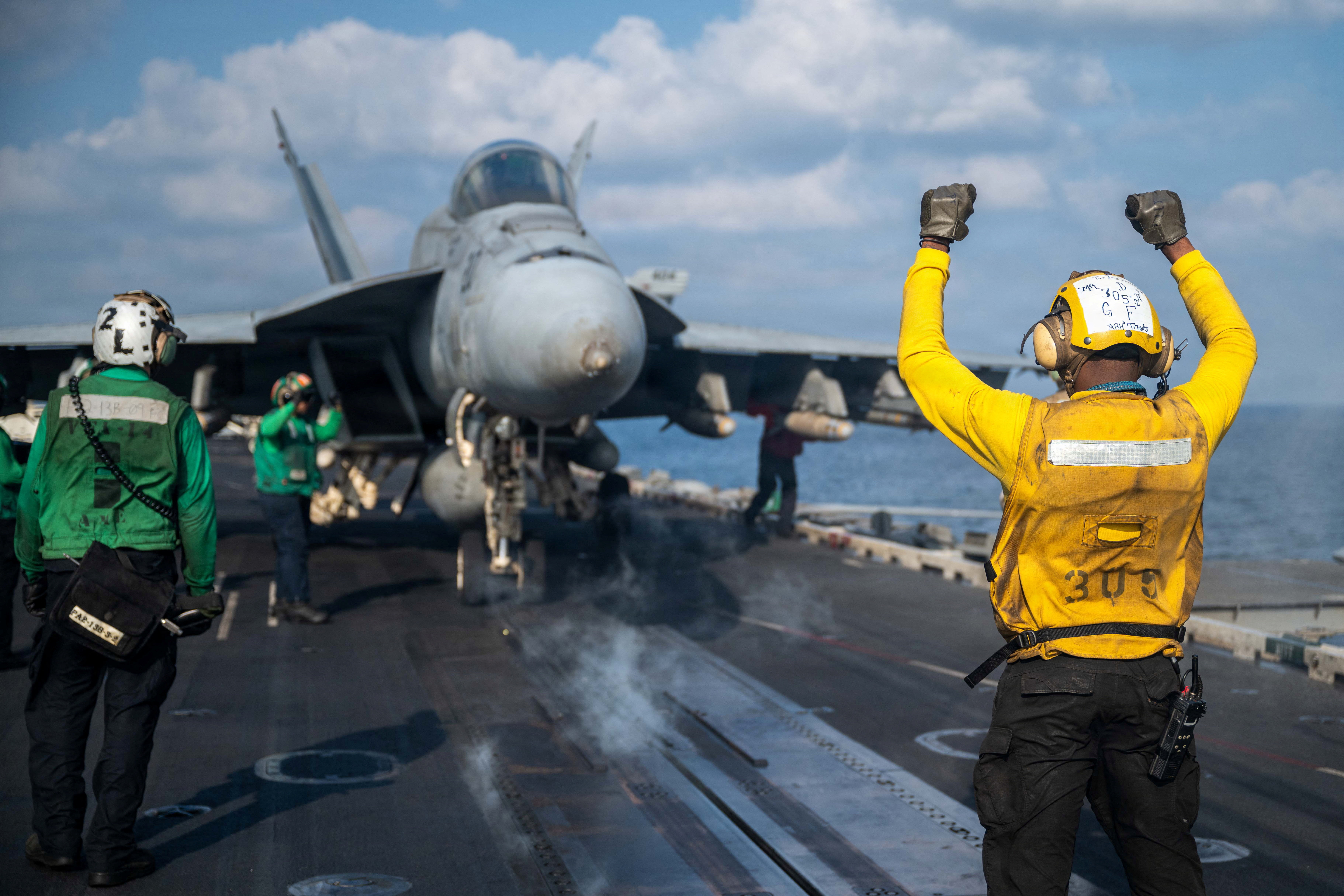
An F/A-18 Super Hornet assigned to the aircraft carrier USS Abraham Lincoln fired a precision munition into the vessel's engineering and steering spaces.
Rising tensions in the Gulf of Oman, a critical maritime chokepoint, are leading to more direct military actions as regional and global powers assert their interests.
This event highlights the increasing risk of military escalation in key shipping lanes and demonstrates modern naval capabilities in disabling commercial vessels, impacting energy security and maritime trade.
The use of precision munitions by a US Navy F/A-18 against an oil tanker signifies an escalation in naval engagement tactics and a clear demonstration of force against commercial shipping in volatile regions.
- · US Navy
- · Defence contractors
- · Maritime insurance companies (due to increased premiums)
- · Oil tanker operators
- · Global shipping industry
- · Regional stability
Increased scrutiny and potential rerouting of oil and cargo shipments through the Strait of Hormuz.
Heightened demand for advanced maritime security technologies and naval patrols in strategic chokepoints.
A shift in naval doctrine towards pre-emptive disabling of vessels deemed threats, potentially lowering the threshold for engagement.
This signal links to a primary source. Continuum Brief monitors and indexes it as part of the live intelligence stream — we do not republish source content.
Read at Navy Times