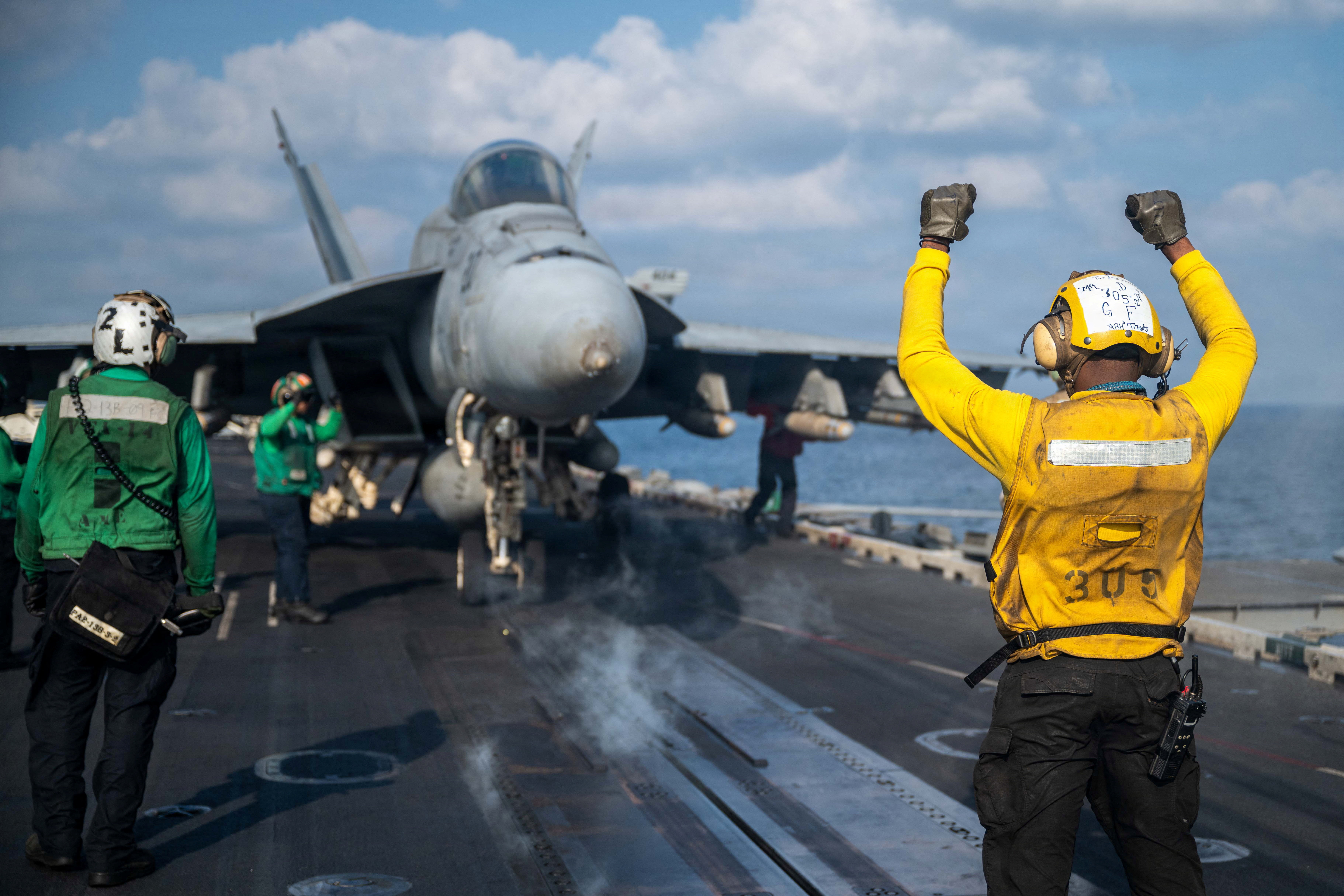
An F/A-18 Super Hornet assigned to the aircraft carrier USS Abraham Lincoln fired a precision munition into the vessel's engineering and steering spaces.
The incident in the Gulf of Oman reflects heightened tensions and the ongoing projection of military power in critical maritime chokepoints, likely a response to regional destabilisation efforts. This follows a period of increasing maritime incidents in the region.
This event showcases advanced military capabilities being used to enforce maritime security, highlighting the escalating risk profile for commercial shipping and the readiness of forces to engage. It underscores the evolving nature of naval engagements and the tactical use of precision munitions against non-state actors or those acting covertly.
The operational playbook for maritime interdiction in contested zones has been updated, with demonstrated intent and capability to disable vessels without sinking them. This event also signals a potential increase in direct military intervention against perceived threats to maritime commerce, altering risk calculations for shipping and insurance.
- · US Navy
- · Defense contractors
- · Naval aviation
- · Maritime piracy groups
- · Oil tankers operating in contested zones
- · Commercial shipping insurance (short-term)
Immediate disruption to the targeted vessel's operations and potentially its illicit activities.
Increased scrutiny and security measures on shipping routes in the Gulf of Oman, potentially affecting trade flows and costs.
Further escalation of regional proxy conflicts, with naval forces playing a more assertive role in protecting commercial interests and enforcing international law.
This signal links to a primary source. Continuum Brief monitors and indexes it as part of the live intelligence stream — we do not republish source content.
Read at Defense News