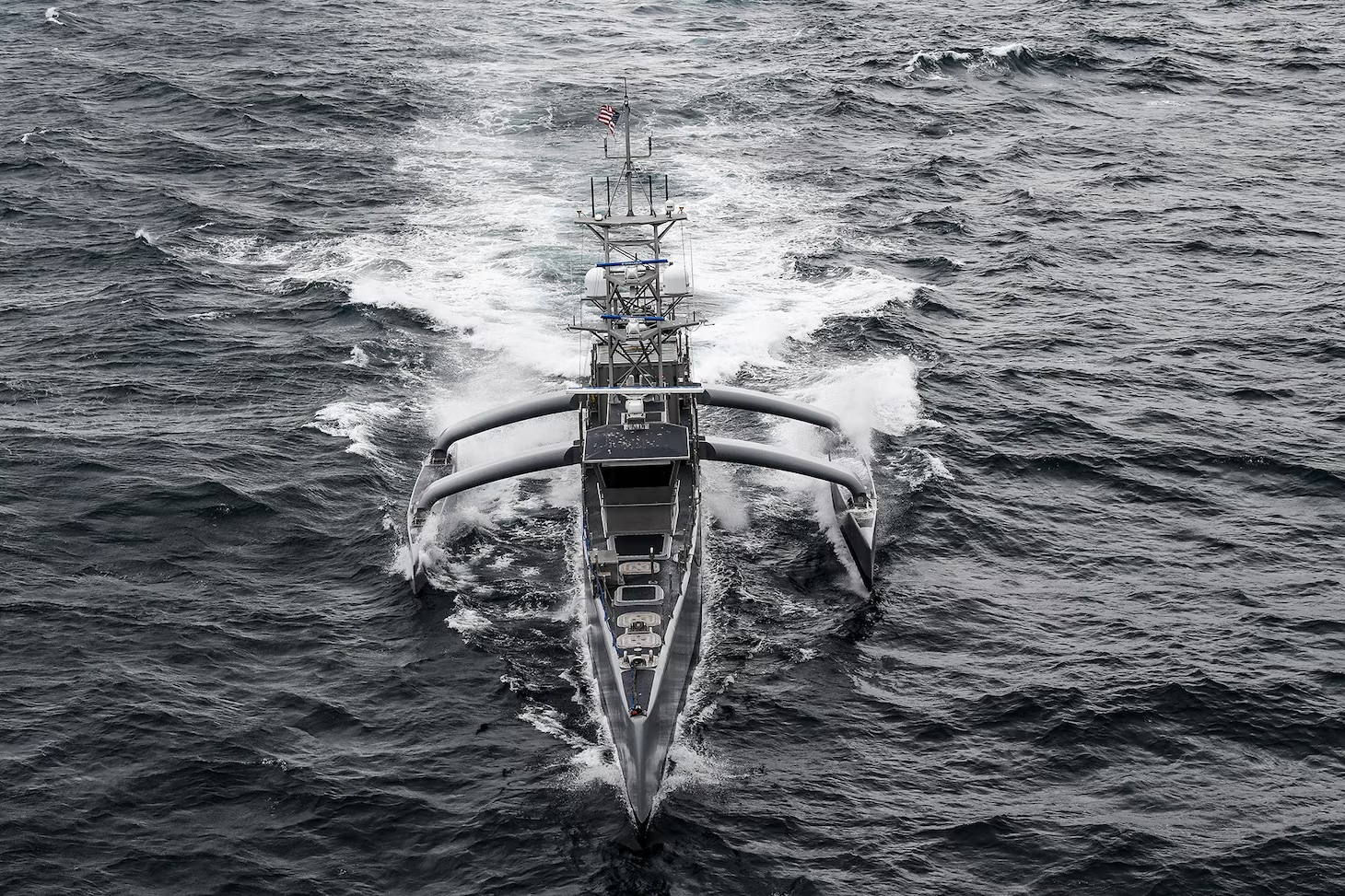
The U.S. Navy announced on Friday that it had selected seven companies to compete to secure the service’s Medium Unmanned Surface Vessel contract.
The US Navy is actively modernizing its fleet and capabilities, with a strong focus on autonomous systems to maintain a strategic advantage and adapt to evolving naval warfare doctrines.
This move accelerates the integration of unmanned surface vessels into naval operations, signaling a significant shift in how naval power will be projected and sustained in the coming decades.
The competitive selection process will lead to rapid prototyping and deployment of MUSV technology, shifting naval procurement towards autonomous, software-defined platforms and away from exclusively large crewed vessels.
- · Defence Tech Companies
- · US Navy
- · Autonomy Software Providers
- · Traditional Shipbuilders focused only on crewed vessels
- · Naval doctrines resistant to unmanned systems
The rapid development and deployment of MUSVs enhances fleet capacity and expands operational reach without increasing personnel risk.
Increased reliance on autonomous vessels will necessitate new cybersecurity protocols and potentially lead to a re-evaluation of international maritime law regarding unmanned systems.
The success of MUSVs could inspire a broader global arms race in unmanned naval platforms, affecting geopolitical stability and naval power balances.
This signal links to a primary source. Continuum Brief monitors and indexes it as part of the live intelligence stream — we do not republish source content.
Read at C4ISRNET