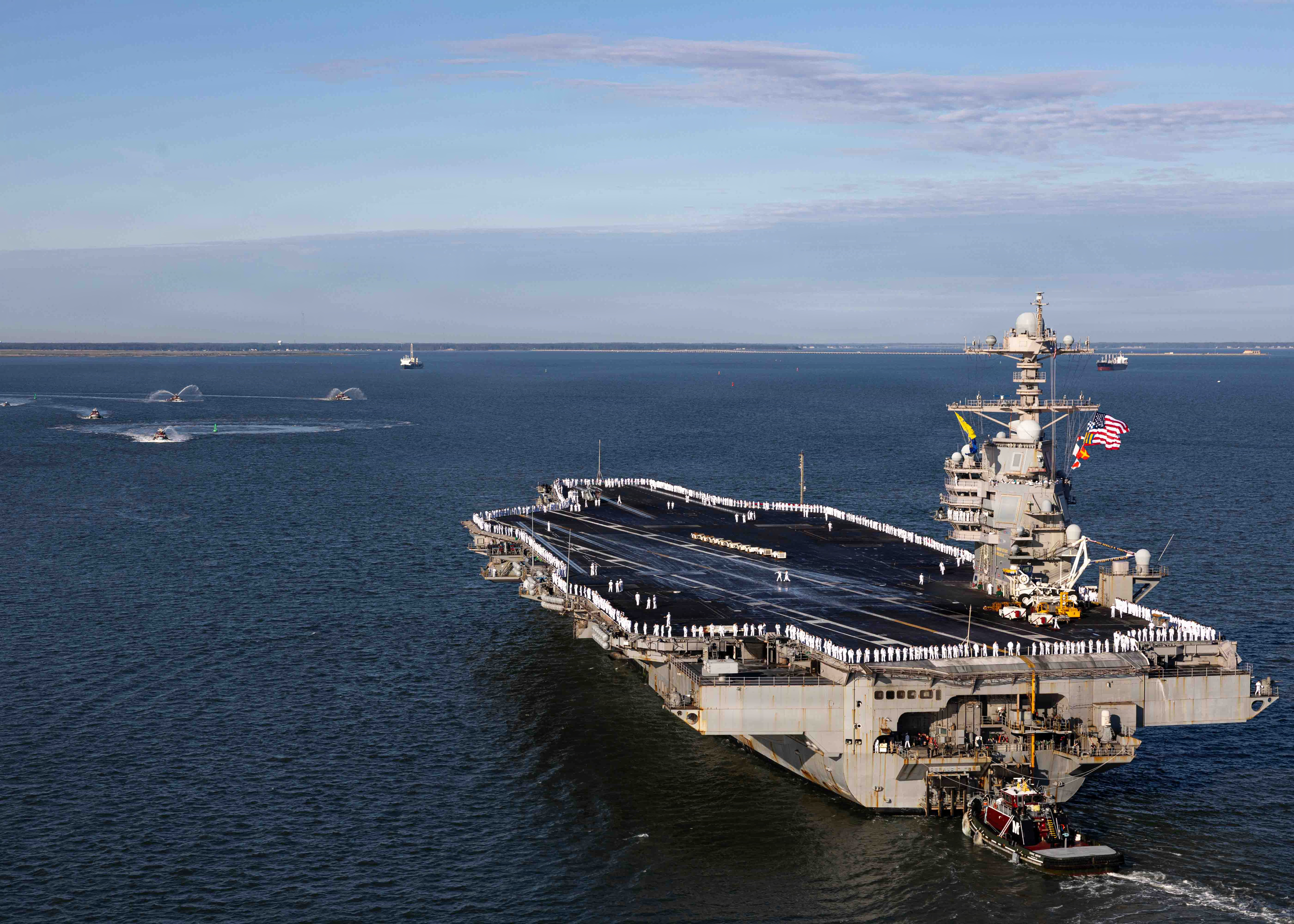
Acting Navy Secretary Hung Cao revealed that Naval Station Norfolk will be “powered from an aircraft carrier" sometime this summer.
This development is emerging as military planners increasingly prioritize resilient and distributed energy solutions, especially for critical infrastructure, driven by geopolitical tensions and the need for operational flexibility.
A strategic reader should care as this demonstrates an innovative approach to energy resilience and potential dual-use capabilities for military assets, addressing vulnerabilities in critical infrastructure.
Naval facilities may gain significant energy independence and operational redundancy, reducing reliance on conventional, potentially vulnerable, grid infrastructure for critical power needs.
- · US Navy
- · Naval support contractors
- · Microgrid technology providers
- · Traditional energy grid operators (in specific military applications)
The immediate effect is a demonstration of an aircraft carrier's ability to serve as a mobile power plant for shore-based operations.
This could lead to broader adoption of distributed, military-grade energy generation for other critical domestic infrastructure.
Long-term, this capability might influence naval vessel design to enhance energy output and off-grid power generation for humanitarian aid or disaster relief scenarios.
This signal links to a primary source. Continuum Brief monitors and indexes it as part of the live intelligence stream — we do not republish source content.
Read at Defense News