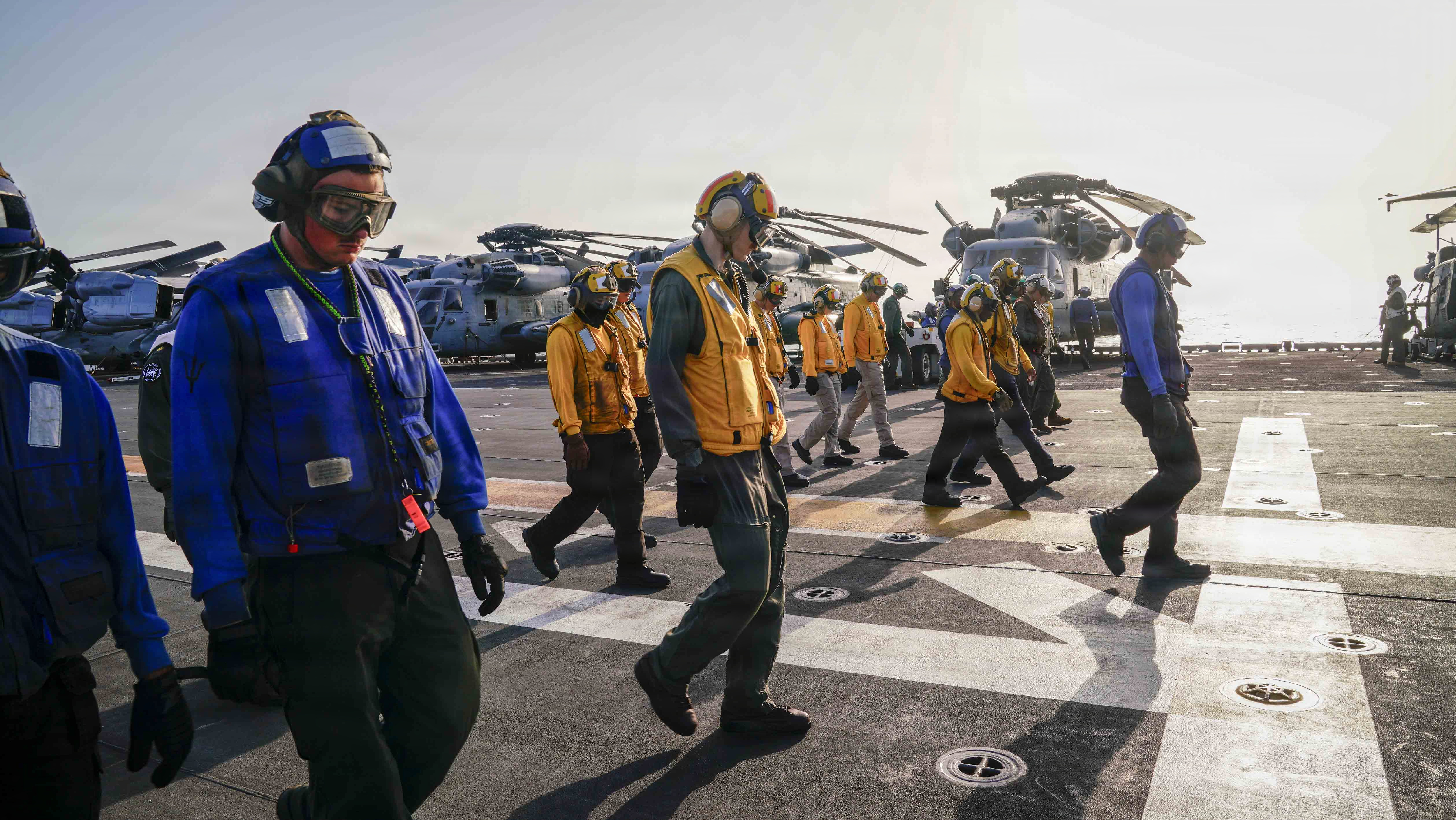
“To maintain this constant state of ‘Level 10’ alert vigilance, to be ready to go at the drop of a hat, is a very stressful ... operational mission."
The ongoing war with Iran escalates the operational tempo and stress on US military personnel and their families, highlighting the long-term human cost of persistent conflict.
This reflects a significant and sustained military commitment that impacts readiness, morale, and public support for prolonged engagements, potentially influencing future defense policy and recruitment.
The 'new normal' of constant alert vigilance fundamentally alters military life and operational planning, moving from episodic deployments to a persistent state of readiness for large-scale conflict.
- · Defense contractors (maintenance, logistics)
- · Military mental health services
- · Military families (quality of life)
- · Troop retention
- · US taxpayers (long-term cost of war)
Increased stress and burnout among US military personnel and their families.
A decline in military recruitment and retention rates as the personal toll of sustained conflict becomes more apparent.
Potential for increased automation and remote operations in future military planning to reduce human exposure to prolonged high-stress environments.
This signal links to a primary source. Continuum Brief monitors and indexes it as part of the live intelligence stream — we do not republish source content.
Read at Army Times