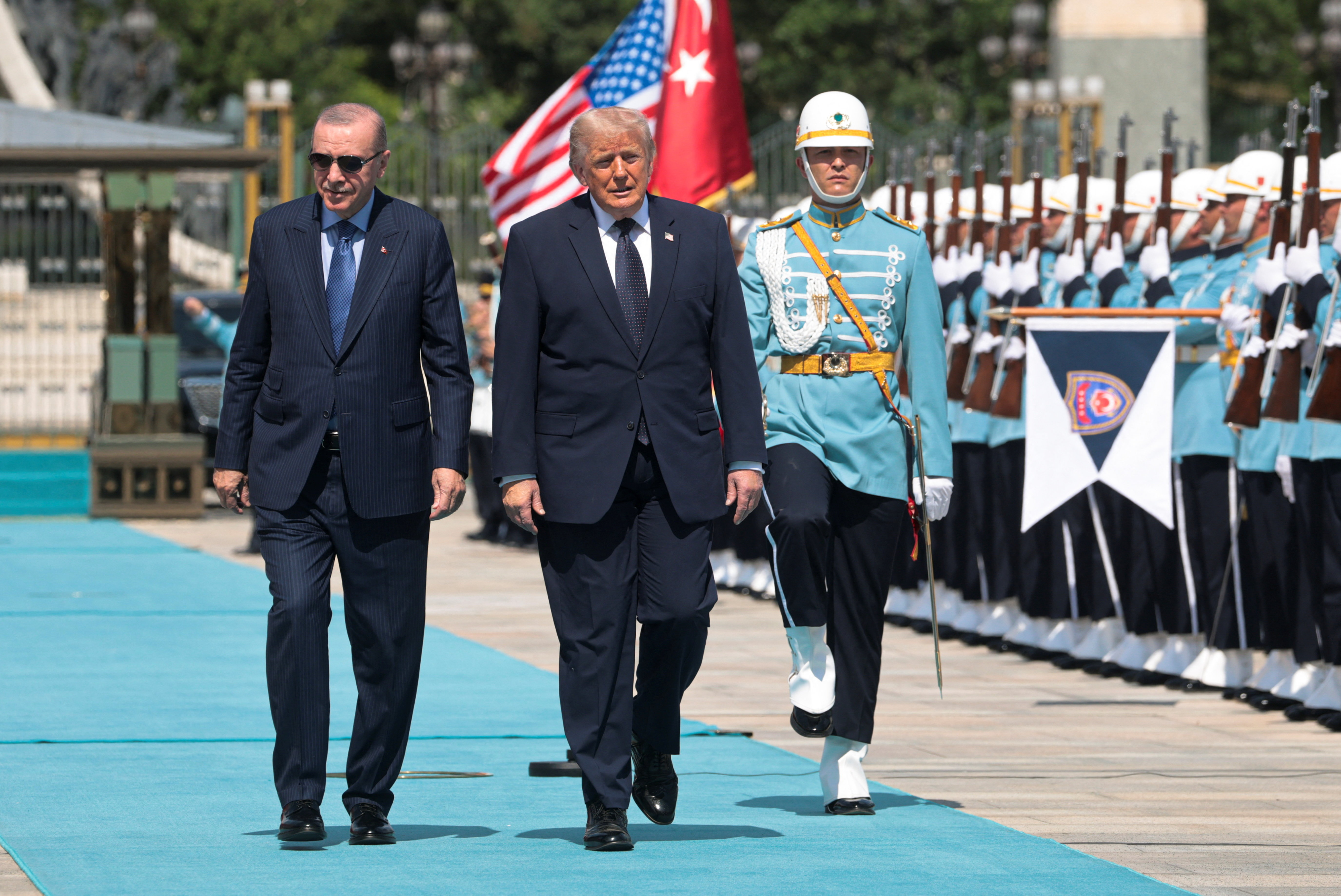
The sanctions were imposed in 2020 over the country's purchase of Russian defense missiles.
The announcement is made by a leading US political figure, indicating a potential shift in foreign policy towards a key NATO ally during a potential new administration.
This move could significantly alter geopolitical alignments, defence procurement strategies, and the balance of power within NATO, directly impacting the defence-tech landscape.
The explicit intention to lift sanctions and potentially sell F-35s marks a reversal of a previous policy, opening the door for Turkey's re-integration into Western defence supply chains.
- · Turkey (defense capabilities, geopolitical standing)
- · US defense industry
- · NATO (potential cohesion)
- · Russia (defense sales opportunities)
- · US political opponents
Turkey's re-engagement with US defense equipment lessens its dependence on Russian military platforms.
Improved US-Turkey relations could influence regional stability in the Middle East and Eastern Europe, potentially impacting other US allies.
A stronger Turkey within NATO, equipped with F-35s, could prompt other non-NATO or aligned nations to deepen security ties with the US.
This signal links to a primary source. Continuum Brief monitors and indexes it as part of the live intelligence stream — we do not republish source content.
Read at Defense News