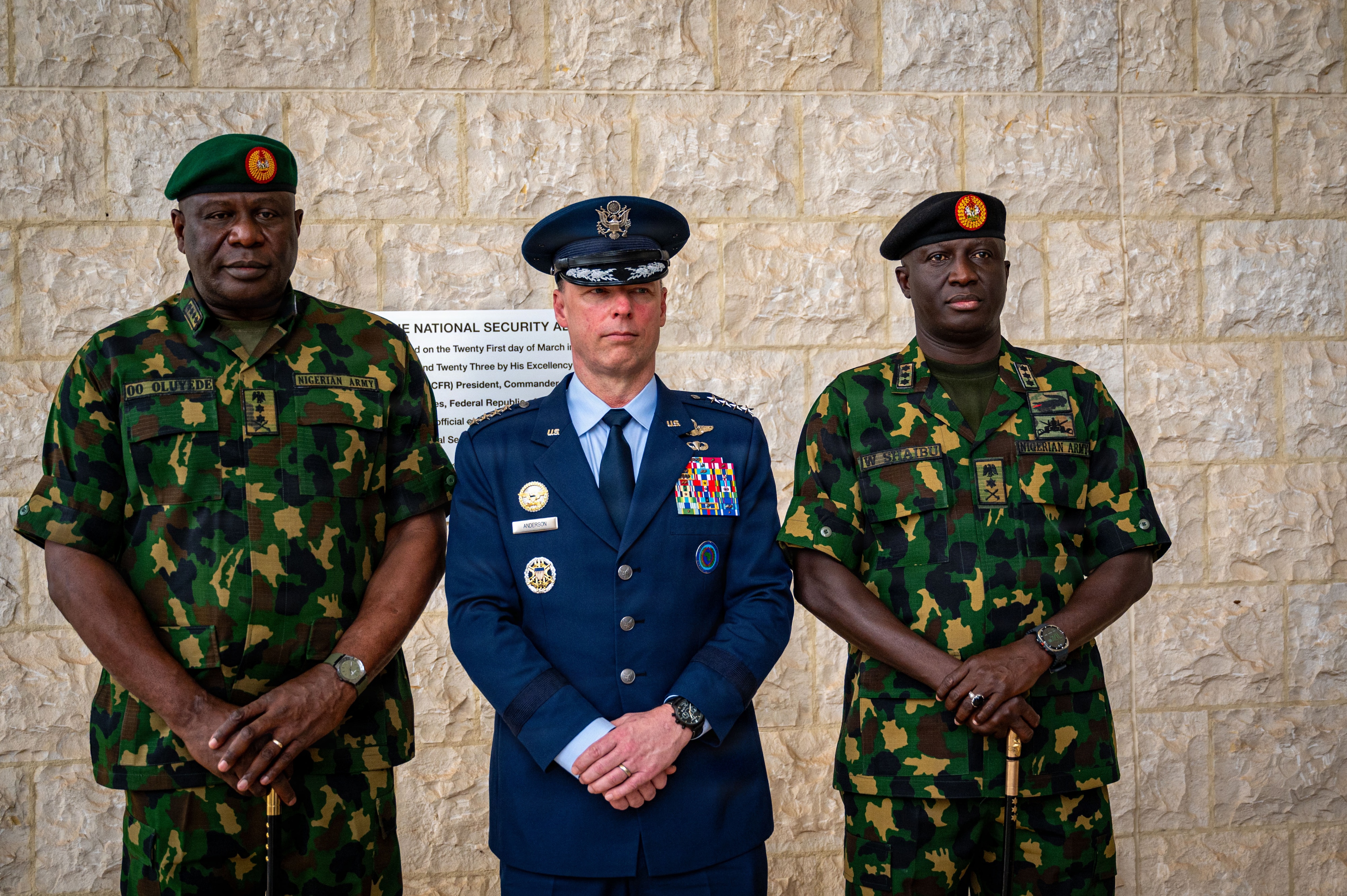
AFRICOM Commander Gen. Dagvin Anderson described May’s joint U.S.-Nigerian as a model for future security cooperation in Africa.
The US is demonstrating a flexible, expeditionary approach to counter-terrorism interventions in Africa, signaling a potential shift in long-term engagement strategy following specific operations.
This event indicates a strategic recalibration by the US regarding military footprint and intervention models in Africa, moving towards agile, mission-specific deployments rather than permanent bases.
The US is moving towards a model of temporary, targeted military engagements in Africa, focusing on specific objectives with local partners, rather than maintaining large standing forces.
- · US Military (AFRICOM)
- · Nigerian Military
- · Defence Tech (specific mission equipment)
- · African security partners
- · ISIS
- · Groups reliant on long-term US presence
Increased operational flexibility for the US in counter-terrorism efforts.
Potentially greater demand for rapid deployment capabilities and interoperability among US and allied forces.
Enhanced trust and strategic partnerships with nations in Africa capable of joint operations, possibly leading to more localized security responsibilities.
This signal links to a primary source. Continuum Brief monitors and indexes it as part of the live intelligence stream — we do not republish source content.
Read at Defense News