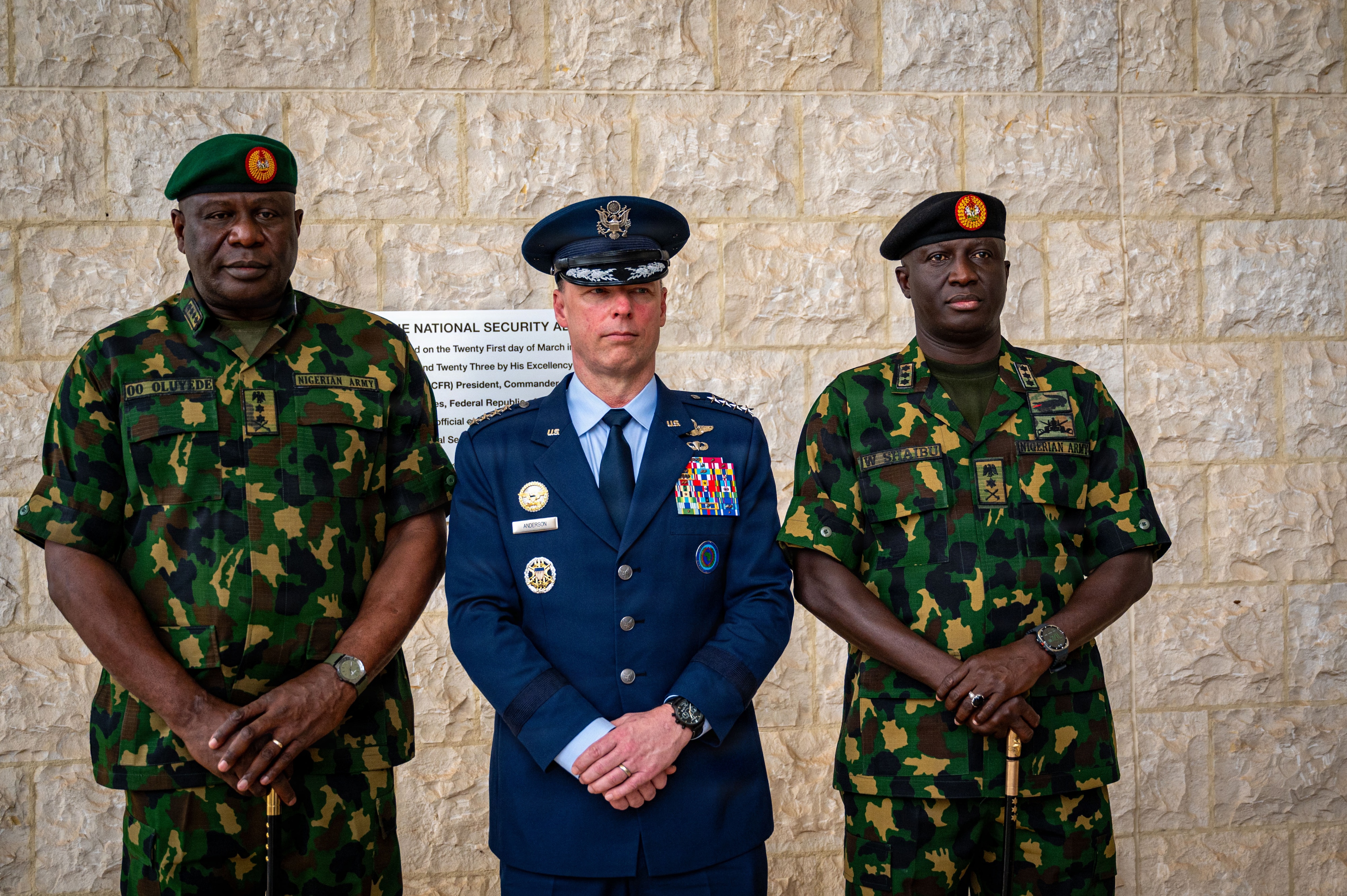
AFRICOM Commander Gen. Dagvin Anderson described May’s joint U.S.-Nigerian as a model for future security cooperation in Africa.
The US is adapting its military strategy in Africa, moving towards a more collaborative and less direct interventionist approach, particularly as global power dynamics shift.
This shift indicates a strategic recalibration of US foreign policy and military engagement, focusing on capacity building and partnership rather than large-scale troop presence, which has implications for regional stability and counter-terrorism efforts.
The model for US military engagement in Africa is changing from traditional direct intervention to one of security cooperation, demonstrating a more agile and partner-centric approach to combating regional threats.
- · Nigerian Military
- · US Defence Contractors (training/equipment)
- · US Foreign Policy (soft power)
- · ISIS
- · Traditional large-scale US AFRICOM deployments
Increased operational effectiveness and legitimacy for local forces in countering insurgencies.
Potential for other African nations to seek similar 'model' security cooperation, leading to a broader shift in US military engagement across the continent.
Enhanced regional stability in areas where such partnerships are successful, potentially drawing investment and reducing the breeding grounds for extremism.
This signal links to a primary source. Continuum Brief monitors and indexes it as part of the live intelligence stream — we do not republish source content.
Read at Navy Times