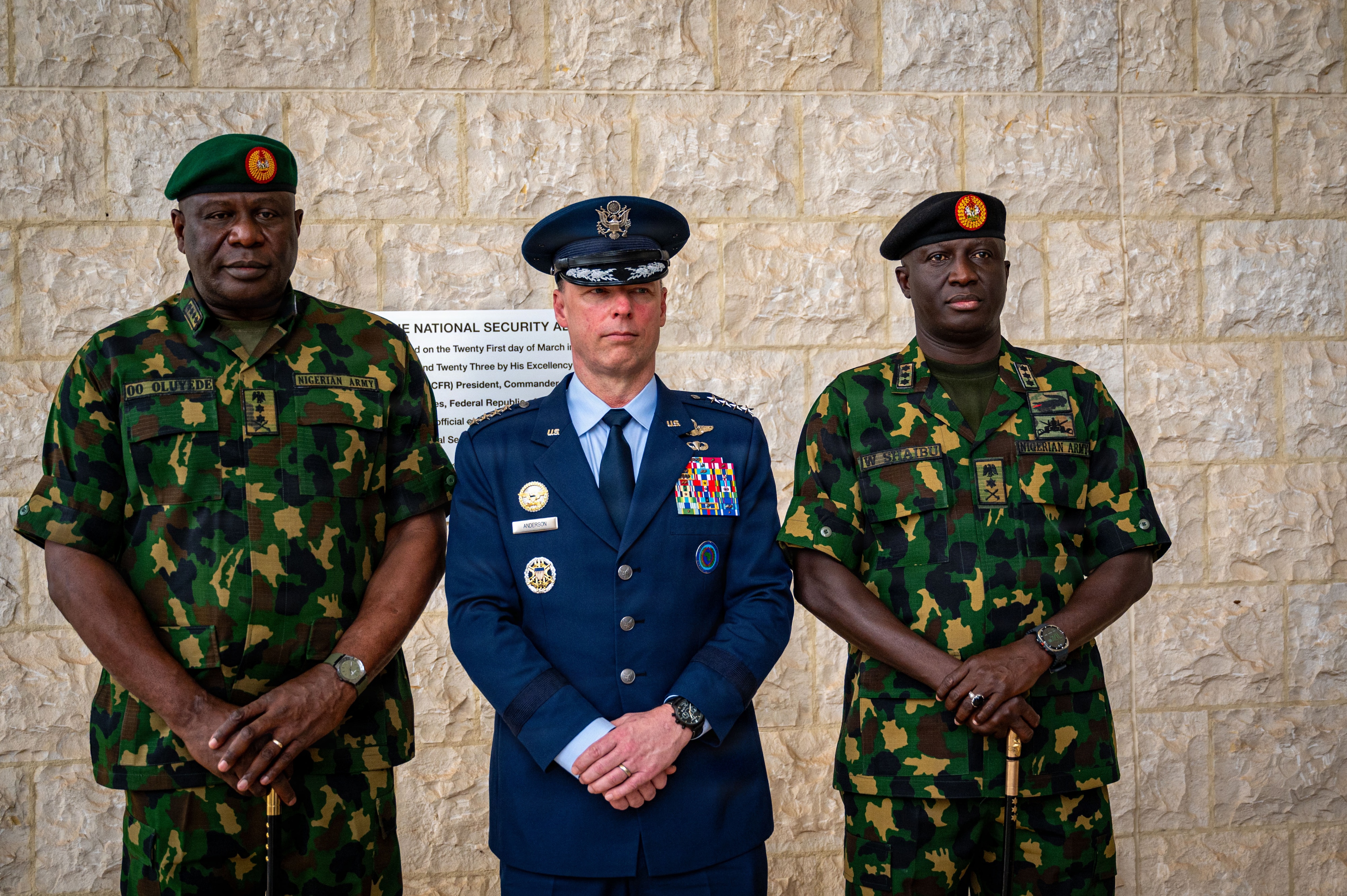
AFRICOM Commander Gen. Dagvin Anderson described May’s joint U.S.-Nigerian as a model for future security cooperation in Africa.
The US is reiterating its strategic shift towards great power competition, leading to a selective disengagement from counter-terrorism operations where local partners can assume more responsibility.
This move highlights the evolving US military posture in Africa, emphasizing capacity building and partnership over direct intervention, which impacts regional stability and international security dynamics.
The US military footprint in Nigeria, and potentially other African nations, will likely shrink, placing more onus on local forces for counter-terrorism efforts while the US focuses on strategic competition.
- · Nigerian military capability
- · US strategic re-orientation towards peer competitors
- · Regional stability through empowered local forces
- · ISIS and other terrorist groups (if Nigerian forces are effective)
- · US direct counter-terrorism intervention capacity
- · African nations reliant on continuous US military presence
The joint US-Nigerian operation culminates in a US force withdrawal, indicating a successful yet limited counter-terrorism effort.
Nigeria's military gains experience and potentially increased funding to manage persistent internal security threats independently.
Other African nations may seek similar 'model' operations and partnerships, leading to a broader shift in US military engagement across the continent.
This signal links to a primary source. Continuum Brief monitors and indexes it as part of the live intelligence stream — we do not republish source content.
Read at Air Force Times