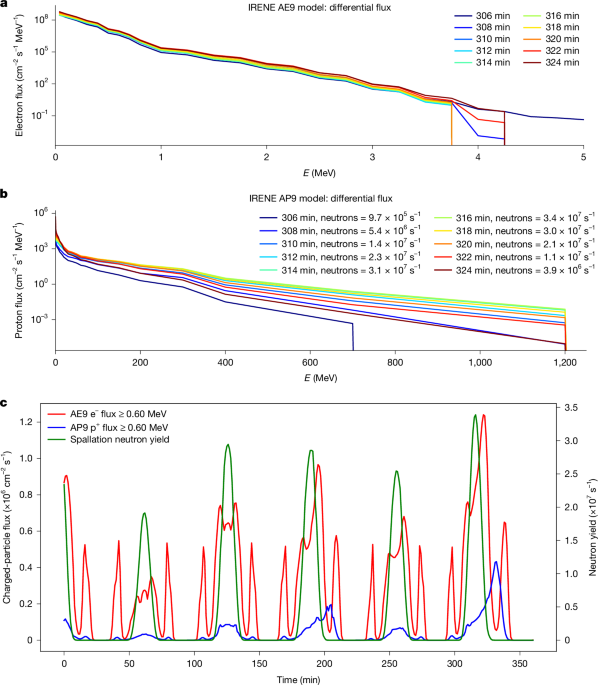
Nature, Published online: 08 July 2026; doi:10.1038/s41586-026-10783-2 By observing the neutrons induced by spallation from protons in the inner Van Allen radiation belts using widely available sensor technologies, the detection of a thermonuclear weapon carried by a space satellite is possible.
The advancement in sensor technology and analysis allows for the verification of non-proliferation treaties in areas previously difficult to monitor, responding to ongoing geopolitical tensions.
This development introduces a new method for detecting nuclear weapons in space, significantly enhancing transparency and reducing the potential for strategic surprise or circumvention of international agreements.
The ability to independently verify the presence of thermonuclear weapons on satellites fundamentally alters the calculus for space-based weaponization and arms control.
- · International arms control agencies
- · Spacefaring nations (non-proliferators)
- · Sensor technology manufacturers
- · Geospatial intelligence platforms
- · Nations pursuing space-based nuclear weapons
- · Rogue state actors
- · Opaque space programs
Increased pressure on nations to adhere to the Outer Space Treaty regarding weapons deployment.
Potential for new international protocols or verification regimes for space activities.
Deterrence of kinetic anti-satellite (ASAT) capabilities designed to obscure weapon deployment.
This signal links to a primary source. Continuum Brief monitors and indexes it as part of the live intelligence stream — we do not republish source content.
Read at Nature — Latest Research