Verizon DBIR: Healthcare Fends Off Increased Social Engineering Attacks
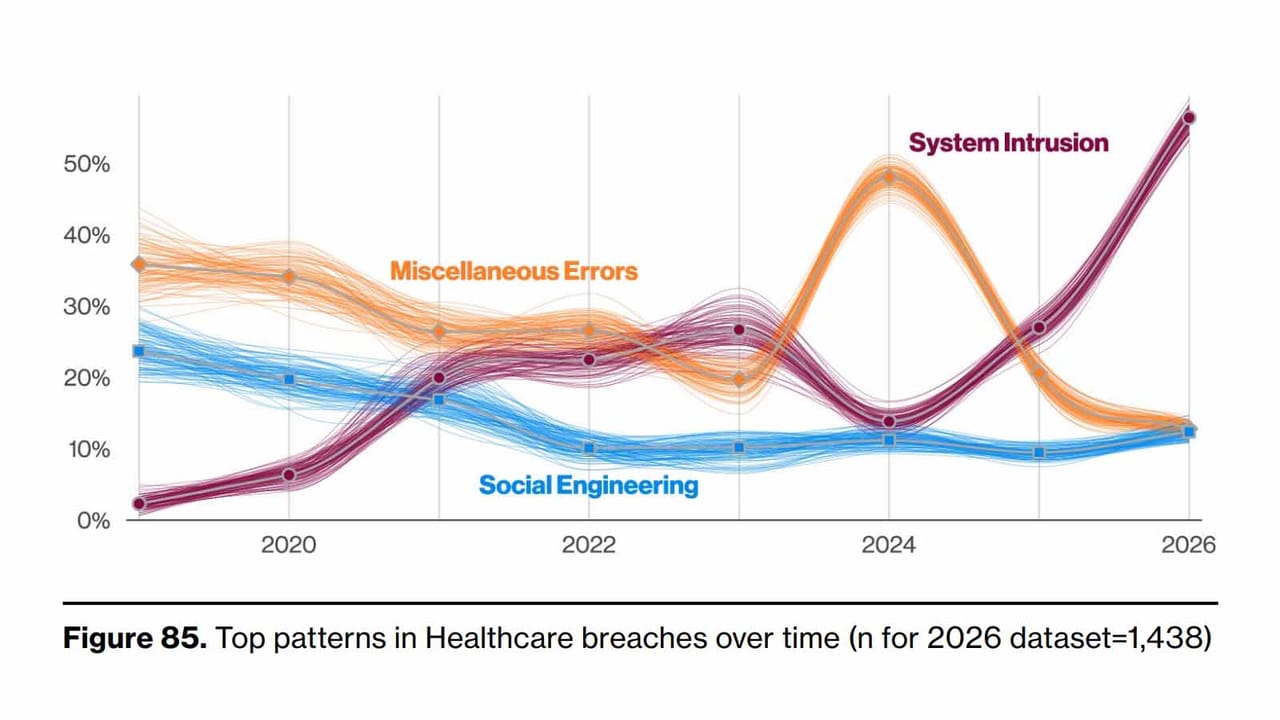
Ransomware and vendor breaches persist, but the 2026 Data Breach Investigations Report (DBIR) highlights how evolving social engineering tactics make the sector more vulnerable.
The consistent annual Verizon DBIR provides a regular pulse on evolving cyber threats, making this report a timely indicator of current attack trends.
The healthcare sector contains highly sensitive data, and increased social engineering attacks, alongside ransomware, pose significant risks to patient privacy and critical infrastructure.
Healthcare entities must now prioritize advanced social engineering defenses and robust vendor risk management more urgently than before, adapting to increasingly sophisticated attack vectors.
- · Cybersecurity providers (especially social engineering defense)
- · Healthcare IT security teams
- · Insurance providers specializing in cyber risk
- · Healthcare providers with inadequate cybersecurity
- · Patients whose data is compromised
- · Third-party vendors with weak security protocols
Increased investment in cybersecurity solutions and training within the healthcare sector.
Potential for new regulations or stricter enforcement regarding data protection and vendor security in healthcare.
Growing pressure for healthcare organizations to share threat intelligence and collaborate on defense strategies.
This signal links to a primary source. Continuum Brief monitors and indexes it as part of the live intelligence stream — we do not republish source content.
Read at Dark Reading