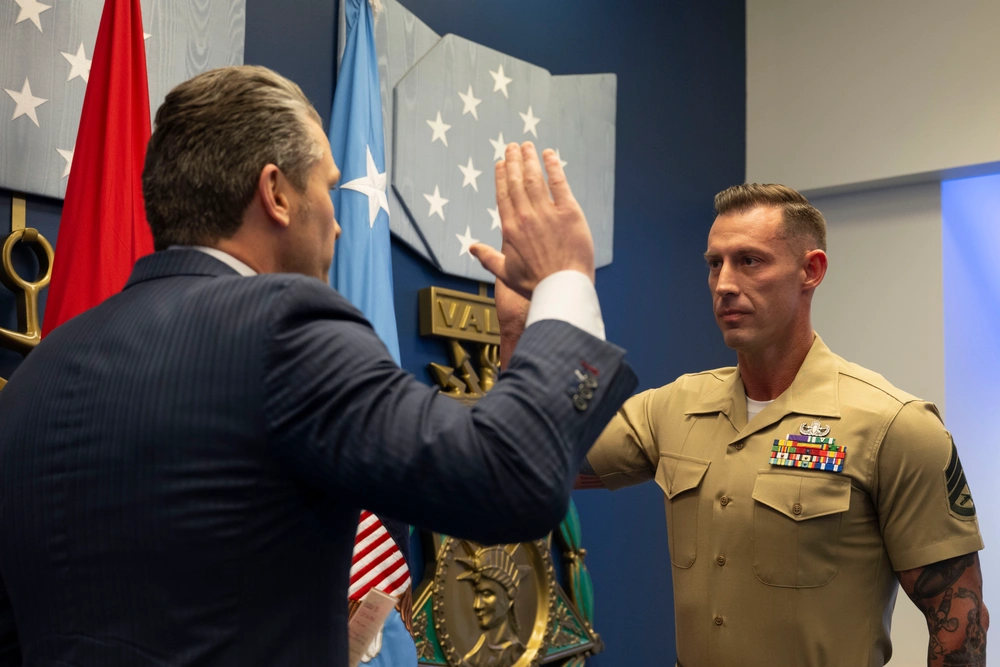
Staff Sgt. Johnny “Joey” Jones, who medically retired in 2012 after losing both of his legs in combat, said he felt he had more to give to the service.
This event reflects a growing trend of military innovation and adaptation regarding personnel, potentially driven by technological advancements enabling individuals with disabilities to contribute effectively.
A strategic reader should care about this as it signifies evolving military personnel policies and the potential for a broader integration of veterans with disabilities through adaptive technologies and roles.
The perception of what constitutes military readiness and serviceable personnel is shifting, indicating a more inclusive and adaptive approach to manpower.
- · Veterans with disabilities
- · Military adaptive technology developers
- · Marine Corps recruitment
- · Military medical rehabilitation
- · Traditional military disability paradigms
- · Rigid military recruitment policies
The re-enlistment highlights successful rehabilitation and adaptive strategies employed by military medical services.
This could lead to increased investment in prosthetics, assistive technologies, and specialized training programs within the defense sector.
The precedent set may influence broader societal views on disability and service, potentially impacting civilian employment and integration for individuals with significant physical challenges.
This signal links to a primary source. Continuum Brief monitors and indexes it as part of the live intelligence stream — we do not republish source content.
Read at Navy Times