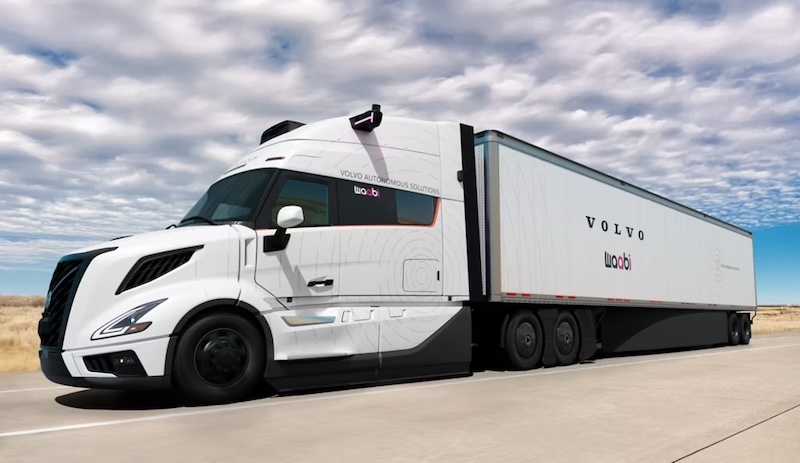
Waabi says it has demonstrated what it describes as a major advance in autonomous driving by transferring its AI-powered virtual driver from one autonomous truck platform to another without requiring additional training, engineering or new data. The company says its Waabi Driver software was integrated with the Volvo VNL Autonomous truck, developed in partnership with […]
Advances in AI, particularly in model generalization and simulation, are enabling increasingly sophisticated autonomous systems to be deployed across diverse hardware platforms.
This demonstration signifies a crucial step towards scalable and cost-effective deployment of autonomous driving technology by reducing the need for extensive retraining and hardware-specific development.
The ability to transfer AI drivers across different vehicle platforms without retraining significantly accelerates the development and commercialization of autonomous trucking, reducing integration complexity and cost for fleet operators.
- · Waabi
- · Volvo
- · Autonomous trucking industry
- · Logistics and supply chain sector
- · Companies reliant on bespoke autonomous driving solutions
- · Human long-haul truckers (eventual impact)
Rapid expansion of autonomous truck fleets, particularly in long-haul logistics.
Increased efficiency and reduced operational costs in supply chains, impacting freight pricing and regional economic competitiveness.
Potential for new business models in freight logistics and a reshaped labor market for drivers across the globe.
This signal links to a primary source. Continuum Brief monitors and indexes it as part of the live intelligence stream — we do not republish source content.
Read at Robotics & Automation News