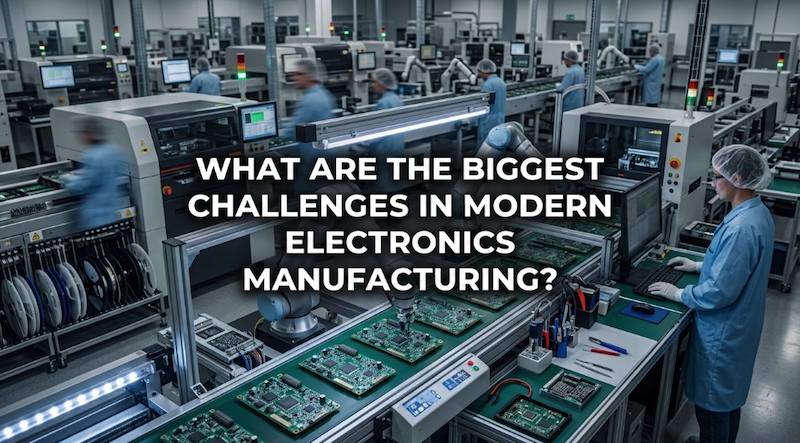
Walk the floor of any active facility today and you see the same stress points. The machines are faster. The placement heads are more precise. But getting a product from a schematic to a boxed unit on a pallet is harder than it was ten years ago. We are dealing with parts that look like […]
The increasing complexity and miniaturization of electronic components, coupled with global supply chain dependencies, are making traditional manufacturing processes obsolete.
This highlights critical vulnerabilities in the foundational industry supporting virtually all advanced technology, impacting innovation cycles and strategic independence.
The ease and efficiency of electronics manufacturing are decreasing, requiring significant investment in new processes, automation, and supply chain resilience.
- · Advanced automation providers
- · Onshore manufacturing facilities
- · Specialized electronic manufacturing services (EMS) firms
- · Traditional low-tech electronics manufacturers
- · Companies reliant on single-source offshore components
- · Supply chain generalists
Companies face higher production costs and longer lead times for advanced electronics.
Governments may incentivize domestic electronics manufacturing to secure critical technology supply chains.
Increased focus on modular design and standardization to mitigate manufacturing complexity could emerge as a design paradigm.
This signal links to a primary source. Continuum Brief monitors and indexes it as part of the live intelligence stream — we do not republish source content.
Read at Robotics & Automation News