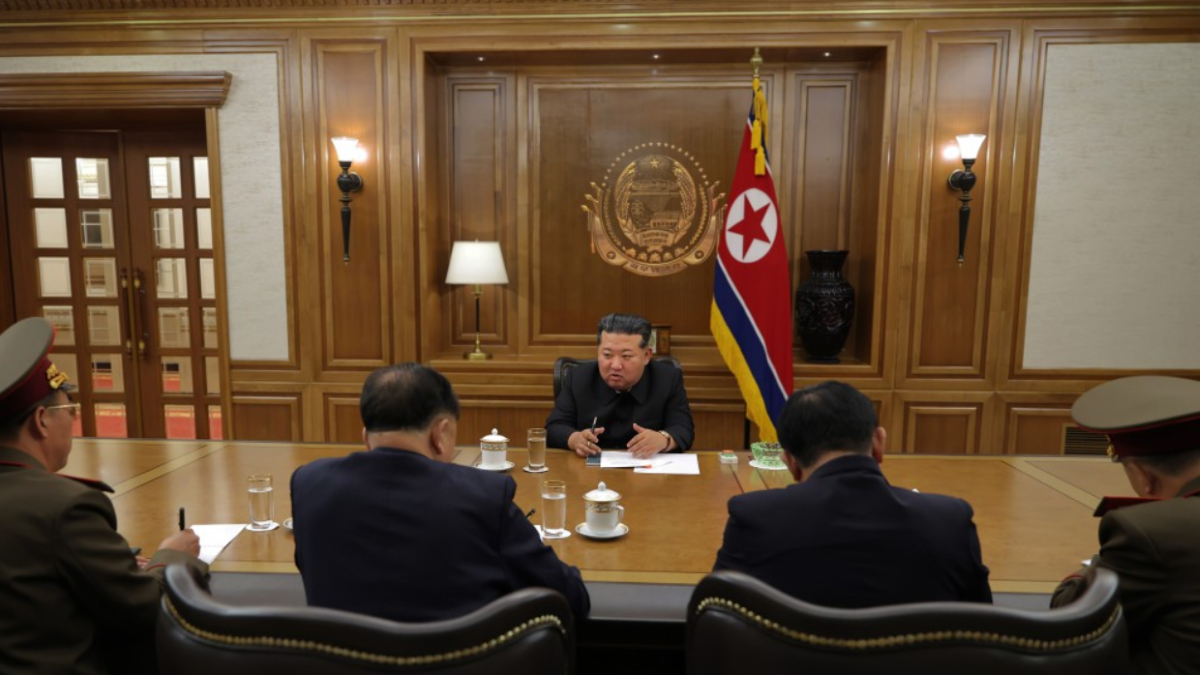
When news broke that North Korea had revised its constitution, analysts in the West and across the Korean Peninsula rushed to declare it the formal death of Korean reunification as a policy objective. The changes were hard to ignore. Pyongyang stripped all references to a unified Korean nation, codified a territorial clause treating the Republic of Korea as a separate foreign state, vested direct nuclear weapons authority in Kim Jong-un personally, and concentrated near-absolute executive power in the supreme leader alone. On the surface, it looked like the official burial of seven decades of
North Korea's formal constitutional revisions regarding reunification and nuclear authority signal a definitive pivot in its long-term strategy, moving past previous diplomatic pretenses.
This shift redefines geopolitical dynamics on the Korean Peninsula and potentially recalibrates regional security calculations, necessitating a re-evaluation of engagement and deterrence strategies.
North Korea is formally abandoning reunification as a policy goal, treating South Korea as a hostile foreign state, and consolidating absolute nuclear and executive power in Kim Jong-un.
- · North Korean regime stability
- · Global nuclear weapons proliferation researchers
- · Prospects for Korean reunification
- · Regional stability
- · South Korean citizens with family in the North
North Korea's explicit nuclear authority reinforces its 'irreversible' nuclear status and hardens its stance against denuclearization talks.
The formal abandonment of reunification could lead to increased military tensions and a more overt arms race on the Korean Peninsula.
This constitutional shift might embolden other rogue states or aspiring nuclear powers, perceiving a successful consolidation of power through nuclear deterrence.
This signal links to a primary source. Continuum Brief monitors and indexes it as part of the live intelligence stream — we do not republish source content.
Read at War on the Rocks