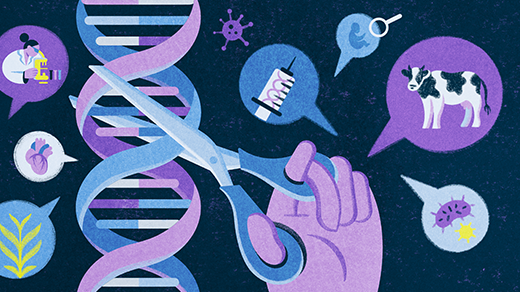
In the first episode of the new season of ‘The Joy of Why,’ Nobel Laureate Jennifer Doudna discusses how she discovered CRISPR’s genome-editing power, the breakthroughs and hurdles during its explosive growth, and what lies ahead for this groundbreaking technology. The post What’s the Future of Gene Editing? first appeared on Quanta Magazine
The discussion about CRISPR's future, led by a Nobel Laureate, highlights the ongoing rapid advancements and critical junctures in gene-editing technology.
Gene editing, particularly CRISPR, represents a foundational technology with the potential to reshape medicine, agriculture, and bio-industrial processes, affecting global health and economic structures.
Continued breakthroughs and public discourse around CRISPR will accelerate its adoption and regulatory landscape, making gene editing a more immediate and impactful reality across various sectors.
- · Biotech companies
- · Pharmaceutical industry
- · Healthcare sector
- · Agriculture industry
- · Traditional drug development paradigms
- · Companies reliant on older genetic modification techniques
Further development and clinical application of CRISPR-based therapies for genetic diseases will accelerate.
Ethical and regulatory frameworks for gene editing will become more complex and globally harmonized.
The ability to 'program' biology will lead to novel materials, food sources, and even new forms of life with profound societal implications.
This signal links to a primary source. Continuum Brief monitors and indexes it as part of the live intelligence stream — we do not republish source content.
Read at Quanta Magazine