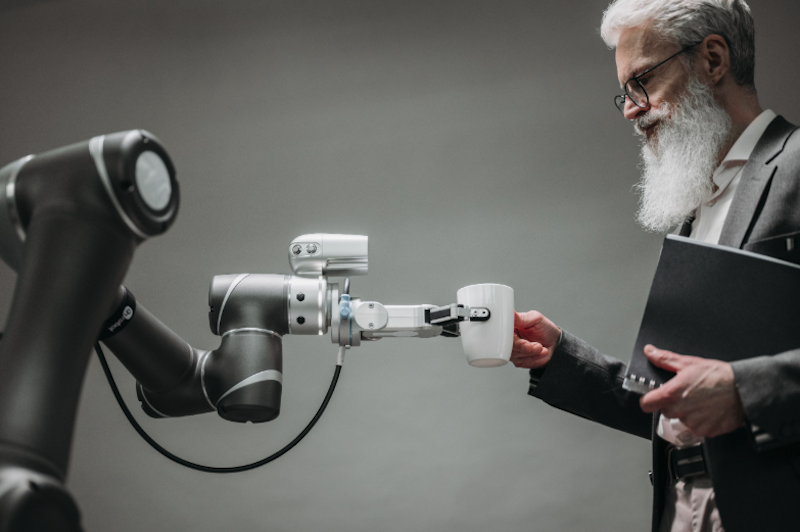
Automation is becoming a software problem. The deeper robots move into production, the more workers need to be confident handling dashboards, updates, alerts and data-driven decisions. The old image of factory automation was a robot arm behind a safety cage, doing one repetitive task faster than a human being ever could. But whilst robots weld, […]
The increasing sophistication and integration of robotics into factory operations necessitate a workforce capable of managing complex software interfaces and data streams.
This shift indicates that the future of industrial automation depends more on human-software interaction than purely mechanical prowess, impacting workforce training and factory design.
Factory automation is evolving from physical robot implementation to software-centric operations, requiring a reskilling of the workforce towards digital literacy rather than just mechanical aptitude.
- · Software developers
- · Automation companies (software-focused)
- · Workforce training programs
- · Manufacturers adopting advanced software
- · Workers without digital skills
- · Traditional factory automation hardware providers
- · Companies slow to retrain workforce
- · Education systems focused purely on mechanical trades
The demand for workers skilled in dashboards, updates, alerts, and data-driven decisions within factory settings will rise significantly.
This will lead to new educational curricula and corporate training initiatives focused on software literacy for manufacturing roles.
Factories will become increasingly 'lights-out' not due to full automation but due to remote monitoring and management by a software-savvy workforce.
This signal links to a primary source. Continuum Brief monitors and indexes it as part of the live intelligence stream — we do not republish source content.
Read at Robotics & Automation News