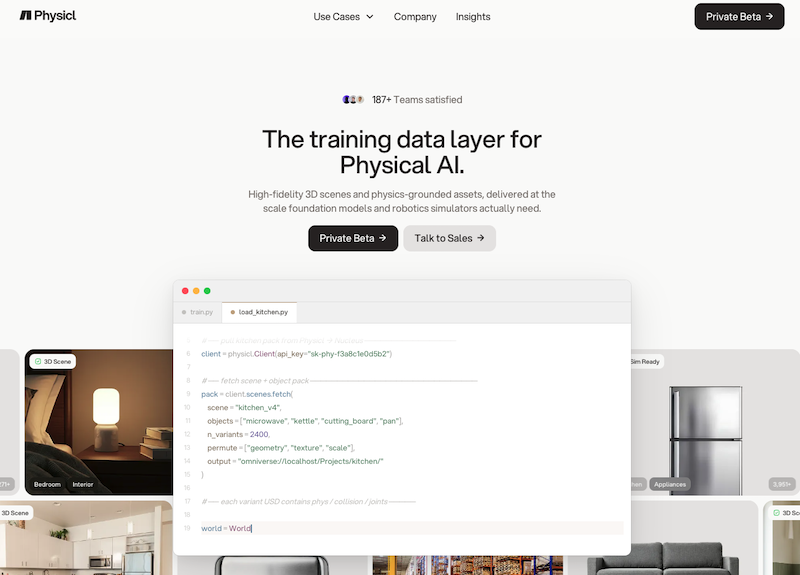
The next leap in robotics won’t come from faster processors or more sophisticated mechanical design. It will come from better data, specifically, from training environments that replicate how the physical world actually behaves. What is physical AI? Physical AI refers to 3D assets and simulation environments built with real physical properties embedded at their core, […]
The increasing sophistication of AI models and the demand for more adaptable robotic systems are pushing the need for better physical world data and simulation environments.
This concept highlights a critical bottleneck in robotics development, suggesting that pure computational or mechanical improvements are insufficient without realistic training data.
The focus for advancements in robotics will shift significantly towards developing high-fidelity physical AI environments and data generation, rather than solely on hardware or algorithms.
- · Digital twin developers
- · Simulation software companies
- · AI data providers
- · Industrial robotics manufacturers
- · Companies relying on abstract AI training
- · Legacy robotics firms slow to adapt
Robots will become more adept at navigating and interacting with complex, unpredictable real-world environments.
The development cycle for new robotic applications will accelerate as physical AI enables more efficient and safer testing.
Widespread adoption of highly capable, generalized robots could fundamentally alter labor markets and industrial processes across numerous sectors.
This signal links to a primary source. Continuum Brief monitors and indexes it as part of the live intelligence stream — we do not republish source content.
Read at Robotics & Automation News