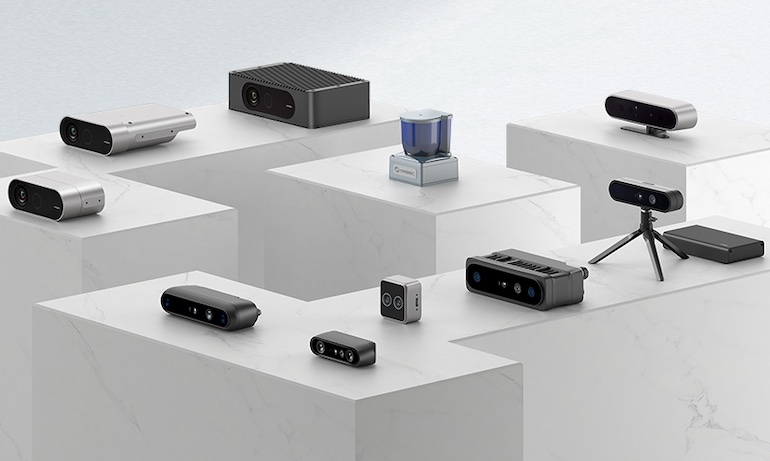
Making machine perception reliable enough for real deployment requires more than better AI; it requires properly calibrated sensors, says an Orbbec co-founder. The post Why robots still struggle to see the real world appeared first on The Robot Report .
As AI and robotics advance, the limitations of machine perception in real-world scenarios are becoming critical bottlenecks, pushing for solutions like enhanced sensor calibration and better-integrated AI, as highlighted by an industry co-founder.
Reliable machine perception is foundational for the widespread commercial deployment of autonomous systems across various sectors, meaning advancements or persistent struggles directly impact market viability and safety.
The emphasis is shifting from solely AI model improvements to include the crucial role of properly calibrated physical sensing hardware, implying a more holistic approach to robotics development is required for practical applications.
- · Sensor manufacturers
- · Robotics calibration service providers
- · Companies specializing in integrated hardware-software AI solutions
- · Advanced robotics research institutions
- · Developers neglecting sensor calibration
- · Companies over-relying on purely software-driven AI perception solutions
- · Early-stage robotics companies with immature sensor integration
- · Sectors requiring high-reliability autonomous operation before these issues are
Ongoing struggles with real-world perception will slow the broader commercial adoption of autonomous robots in diverse environments.
Increased investment in sensor technology, calibration methodologies, and edge computing for real-time perception processing will become paramount.
The definition of 'AI readiness' in robotics will expand beyond algorithmic performance to emphatically include robust and reliable sensory input, potentially redefining industry standards and regulatory frameworks.
This signal links to a primary source. Continuum Brief monitors and indexes it as part of the live intelligence stream — we do not republish source content.
Read at The Robot Report