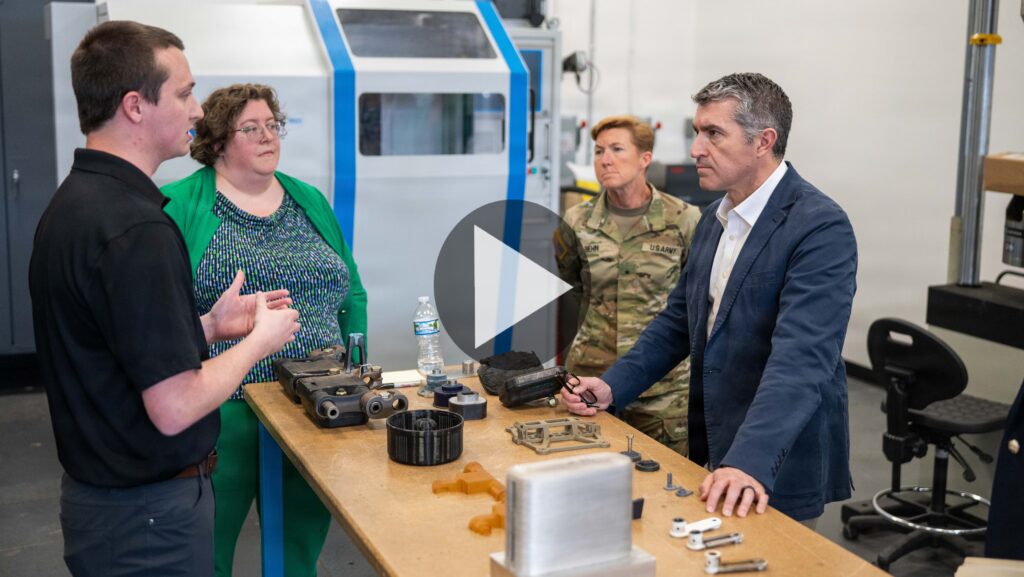
“It’s a way for us to communicate and leverage industry,” said Michael Cadenazzi Assistant Secretary of Defense for Industrial Base Policy.
The invocation of the DPA by the Trump administration at this juncture reflects an escalating need to re-engage and direct industrial capacity, likely in response to evolving geopolitical tensions and a perceived weakening in the domestic defense industrial base.
A strategic reader should care because this move signals a more direct governmental role in industrial policy, potentially accelerating the recapitalization of the defense sector and impacting supply chains.
The explicit use of the DPA indicates a shift towards governmental leveraging of industry to meet strategic objectives, potentially leading to increased production capacity in critical areas and stronger domestic supply chain resilience.
- · Domestic defense contractors
- · Military industrial complex
- · US industrial base
- · Companies reliant on offshore production
- · Bureaucratic inertia
The immediate effect is increased communication and coordination between the Pentagon and the defense industry, likely resulting in accelerated production of specific defense materiel.
Plausible second-order consequences include a resurgence in domestic manufacturing capabilities dedicated to defense and potentially an increase in defense-related R&D investment.
A speculative third-order consequence could be a long-term shift in industrial policy, prioritizing national security needs over pure market efficiency, leading to a more integrated government-industry model.
This signal links to a primary source. Continuum Brief monitors and indexes it as part of the live intelligence stream — we do not republish source content.
Read at Breaking Defense