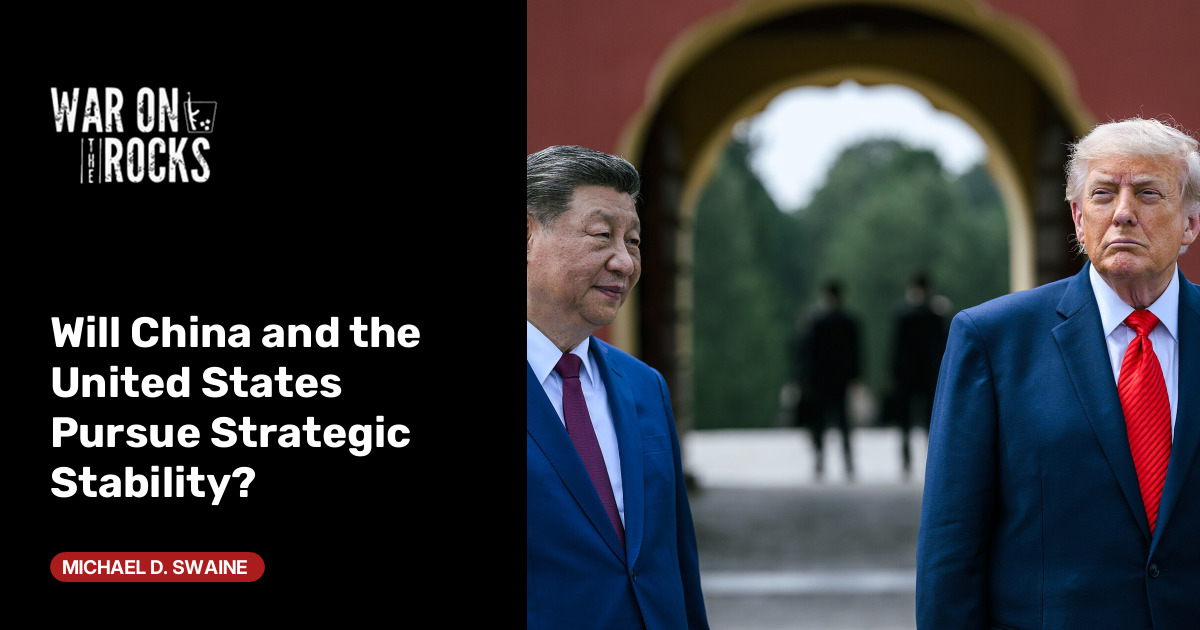
In 2024, Michael Swaine wrote, “How to Stop the United States and China from Sliding into War,” where he identified areas that could increase the possibility of an armed conflict between the United States and China. Two years later, after recent talks between President Trump and President Xi, we asked Michael to revisit his arguments.Image: U.S. Department of StateIn your 2024 article, you flagged a rising possibility of major armed conflict between China and the United States. That was before American forces became militarily involved in Iran. Does that involvement change your calculus? And c
Amidst persistent geopolitical tensions, recent high-level talks between US and Chinese leaders provide a timely opportunity to re-evaluate pathways to strategic stability.
The potential for armed conflict between the United States and China poses an existential threat to global stability and economic order, making discussions of strategic stability critical.
The involvement of American forces in Iran introduces a new variable into the Sino-American strategic calculus, potentially altering the perceived risk landscape and areas of interaction.
- · Diplomacy and strategic dialogue
- · Global stability advocates
- · Hardline factions in both nations
- · Regions involved in proxy conflicts
The US and China may prioritize de-escalation mechanisms to manage regional flashpoints.
Increased focus on shared geopolitical interests could emerge, despite ongoing competition.
A framework for managing military incidents could be established, reducing the risk of unintended escalation.
This signal links to a primary source. Continuum Brief monitors and indexes it as part of the live intelligence stream — we do not republish source content.
Read at War on the Rocks