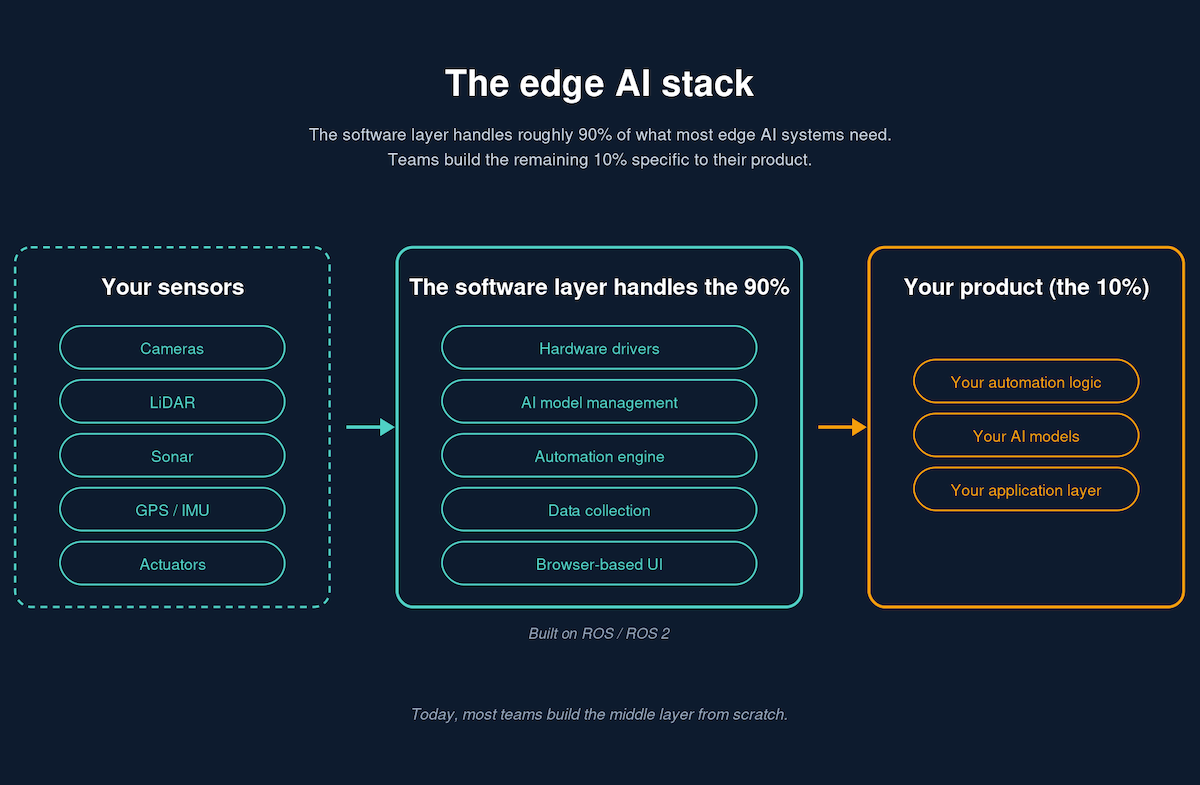
Before Windows, only engineers and computer scientists could work with computers. Edge AI is causing a similar accessibility shift for robotics. The post Windows for robots: Edge AI expands usability appeared first on The Robot Report .
The proliferation of AI models suitable for edge deployment and growing demand for accessible robotics are converging to simplify robot development and deployment, making this shift timely.
This development lowers the barrier to entry for robotics, expanding its applications beyond specialized engineering and accelerating adoption across various industries, similar to the PC revolution.
Robotics development shifts from a highly specialized domain to one accessible to more developers and integrators, enabling broader deployment and new use cases.
- · Robotics developers
- · Edge AI chip manufacturers
- · Automation companies
- · End-users of robotics
- · Companies relying on proprietary, complex robotics platforms
- · Specialized robotics integrators with high barriers to entry
Increased pace of innovation and deployment of robots in diverse sectors due to simplified programming interfaces.
New competitive landscape emerges as more players enter the robotics market, leading to specialized applications and pricing pressure.
Ethical and regulatory frameworks for ubiquitous autonomous systems become a more urgent and complex policy challenge.
This signal links to a primary source. Continuum Brief monitors and indexes it as part of the live intelligence stream — we do not republish source content.
Read at The Robot Report