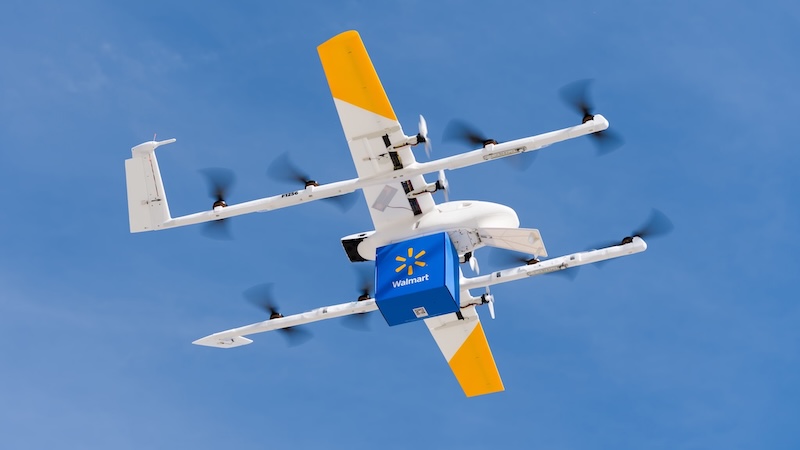
Drone delivery company Wing and retail giant Walmart are expanding what they describe as the largest residential drone delivery network in the United States, adding seven new metropolitan areas as they work toward a goal of reaching 40 million Americans by 2027. The expansion will bring drone delivery services to Memphis, New Orleans, Philadelphia, Phoenix, […]
Significant investment and technological advancements in drone autonomy and logistics infrastructure are reaching a scale that enables broader commercial deployment.
This expansion by major players like Wing and Walmart demonstrates the accelerating viability of drone-based logistics, potentially disrupting traditional last-mile delivery models and creating new economic efficiencies.
The operational footprint and accessibility of drone delivery services are expanding considerably, moving from niche trials to servicing a broader segment of the US population.
- · Wing (Alphabet)
- · Walmart
- · Drone manufacturers
- · Consumers in target areas
- · Traditional last-mile delivery services
- · Local logistics companies
Increased market penetration and public familiarity with autonomous drone delivery services.
Pressure on existing parcel delivery companies to innovate or partner to compete with new delivery paradigms.
Re-evaluation of urban zoning and aerial right-of-way regulations to accommodate expanded drone operations.
This signal links to a primary source. Continuum Brief monitors and indexes it as part of the live intelligence stream — we do not republish source content.
Read at Robotics & Automation News