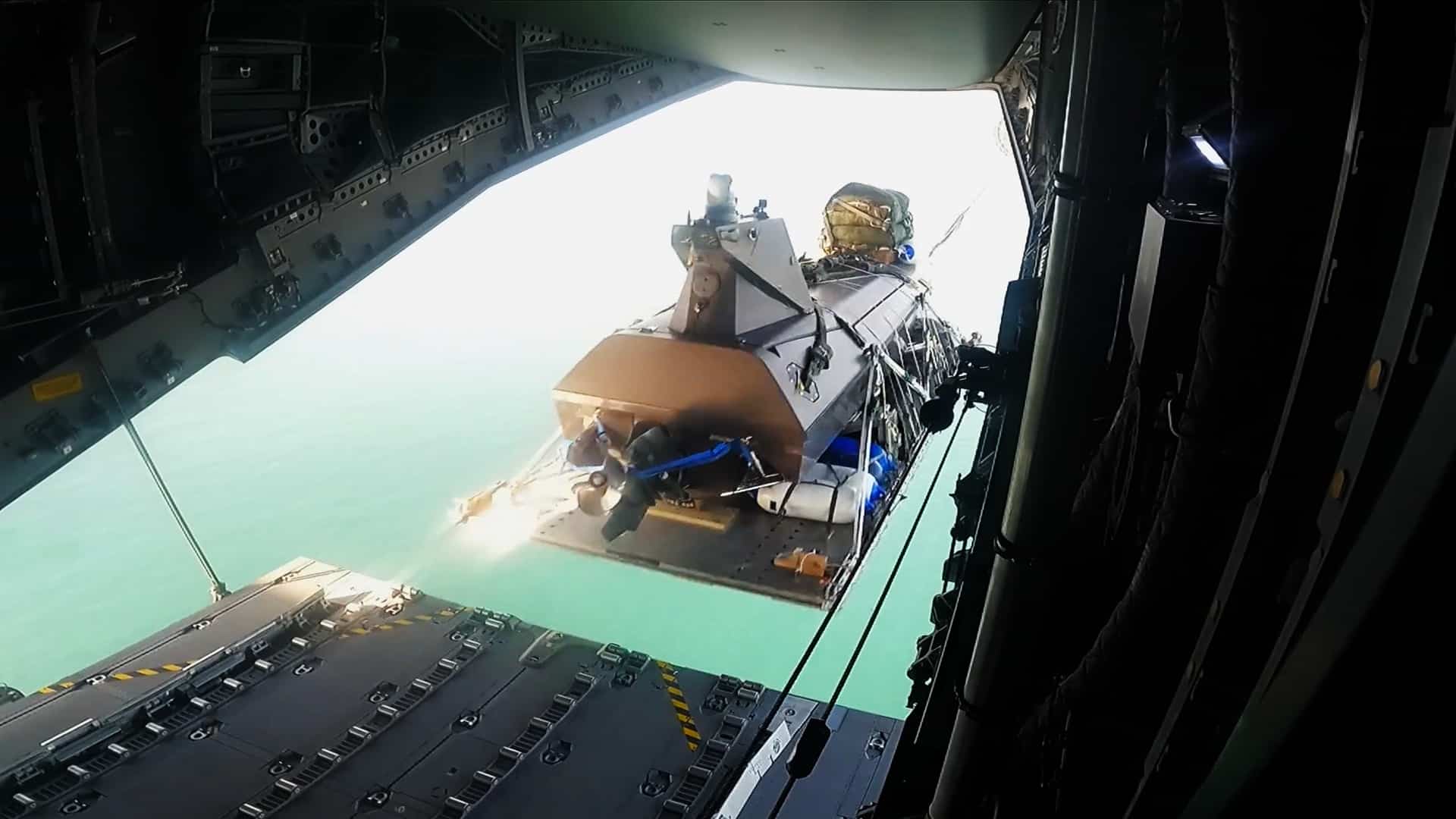
Kraken Technology Group and Capewell, supported by the Royal Navy under Project Beehive, have successfully completed the world’s first extracted-load airdrop of an uncrewed surface vessel (USV) from an A400M military transport aircraft. Kraken press release During a series of pioneering trials, a Project Beehive specification K3 SCOUT USV was deployed on Capewell’s Universal Maritime ... The post World’s first USV airdrop accomplished by Kraken and Capewell appeared first on Naval News .
The increasing need for rapid deployment of autonomous systems in diverse operational environments is driving innovation in military logistics and force projection.
This development significantly enhances the operational flexibility and reach of uncrewed surface vessels, enabling swift deployment for surveillance, reconnaissance, and combat support in remote or contested areas.
The ability to airdrop USVs from military transport aircraft changes the paradigm for naval rapid response and introduces new tactical options for deploying autonomous maritime assets.
- · Naval forces
- · Defence contractors (autonomous systems)
- · Aerospace logistics
- · Traditional naval logistics
- · Adversaries with limited counter-USV capabilities
Rapid deployment of USVs will become a standard operational capability for many naval powers, increasing their maritime domain awareness and response times.
This capability could lead to the development of larger, more complex USVs designed for aerial deployment, expanding their mission sets and strategic importance.
The integration of air-dropped USVs into swarming tactics or combined arms operations could create novel challenges for maritime defense and offense.
This signal links to a primary source. Continuum Brief monitors and indexes it as part of the live intelligence stream — we do not republish source content.
Read at Naval News